









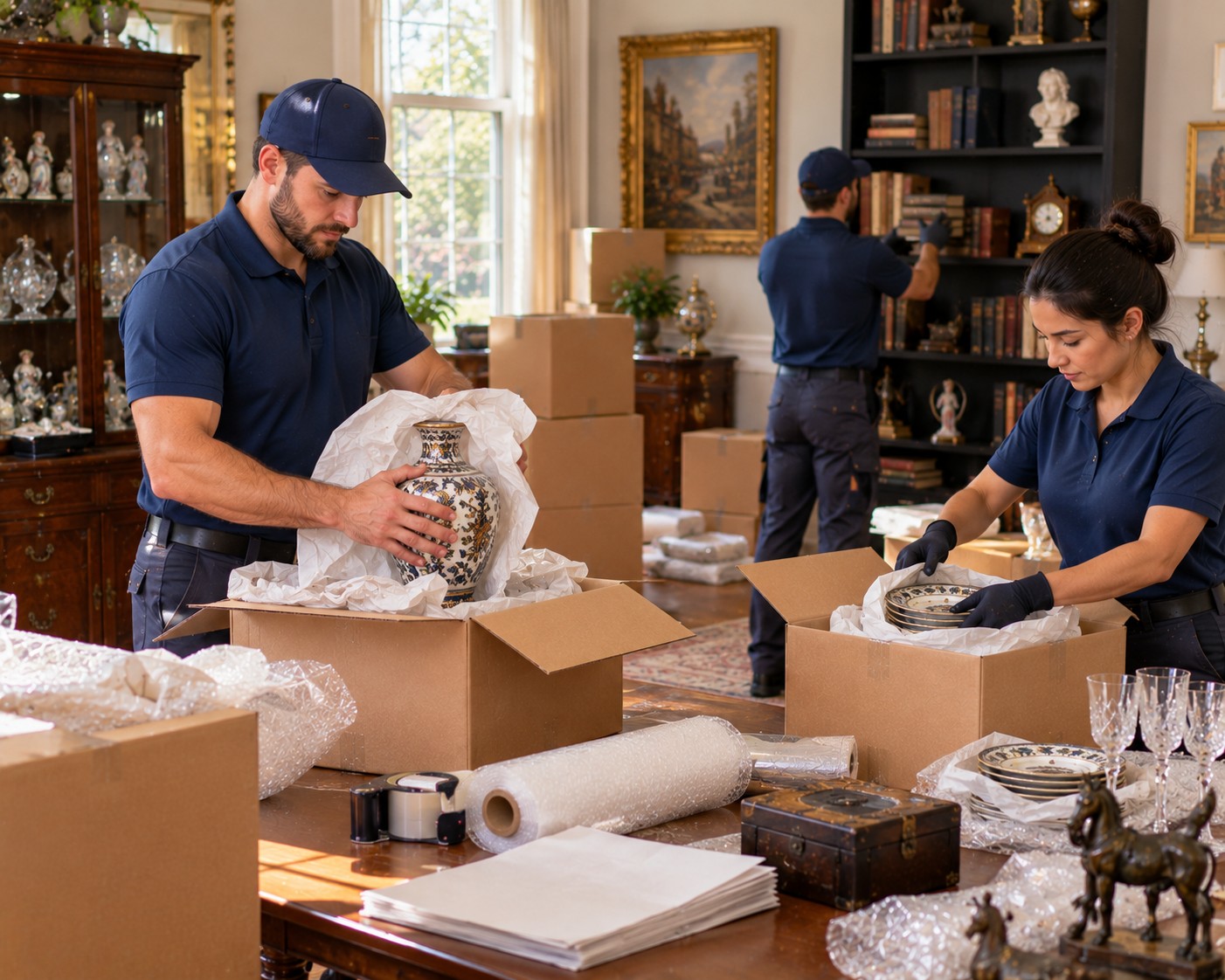
A home filled with collections presents a completely different packing challenge from an ordinary household move. Shelves may hold hundreds of small objects, cabinets can contain delicate pieces, and individual items may have very different shapes, materials, and levels of sentimental or financial value. Rushing through such a collection can create unnecessary risks and make inventory management difficult.
For these homes, packing is better approached as a controlled preservation process. Price Movers https://pricemovers.com/ provides moving assistance for household belongings and specialized items, with its packing approach emphasizing customized strategies, careful handling, and appropriate materials.
Begin With a Collection Assessment
Before anything is wrapped, the collection should be evaluated as a group of individual categories rather than one large inventory.
Separate Items by Material and Fragility
Glass figurines, ceramics, books, artwork, coins, model pieces, antiques, and decorative objects should not automatically be packed together. Different materials respond differently to pressure, vibration, moisture, and impact.
Creating categories makes it easier to select suitable containers and protective materials for each group.
Identify Particularly Important Pieces
Some objects may have substantially greater sentimental or monetary importance than others. Mark these items during the initial assessment so they receive additional attention throughout packing and loading.
A basic inventory can also record descriptions, quantities, and photographs before the collection leaves its original location.
Create a Packing System Before Opening Boxes
Collections can contain hundreds or thousands of individual pieces. Without a system, it becomes easy to lose track of which objects belong together.
Preserve Existing Groupings
If items are displayed as sets, series, or themed groups, keep those relationships intact whenever practical. A collection should not become a random assortment of objects simply because everything fits into the same carton.
Small bags or labeled compartments can help keep accessories, stands, certificates, and other components with the correct pieces.
Number Boxes and Record Contents
Each carton can receive an identification number connected to an inventory list. The description does not need to document every tiny detail, but it should provide enough information to identify the general contents.
This becomes especially valuable during unpacking when dozens of similarly sized boxes are waiting to be opened.
Choose Protection Based on the Object
There is no single wrapping material suitable for every collection.
Prevent Movement Inside the Box
A fragile object can be damaged even when the outside of the carton remains intact if the item is allowed to move freely. Appropriate cushioning should limit movement while avoiding excessive pressure.
Small collectibles may need individual wrapping and separation. Larger decorative pieces may require layered protection around edges, corners, or protruding components.
Consider Custom or Reinforced Containers
Unusually shaped, highly fragile, or valuable pieces may benefit from stronger cartons or customized protection. Oversized artwork and delicate display pieces often cannot be treated like ordinary household goods.
Professional Packing can be especially useful in these circumstances because the preparation process can be adapted to the characteristics of individual belongings rather than relying entirely on standard cartons.
Pay Attention to Shelving and Display Furniture
The collection itself is only part of the challenge. Display cabinets, glass shelving, bookcases, and specialized storage furniture also require preparation.
Empty Furniture Completely
Remove objects from shelves before moving the furniture itself. Glass shelves should be separately wrapped and secured, while small hardware should be labeled and kept together.
If a cabinet can be safely disassembled, its components may be easier to protect and transport individually.
Photograph Displays Before Disassembly
Photographs can document how a collection was arranged before the move. This can be useful when recreating a display in the new home.
It also provides a visual reference for identifying where certain pieces belonged.
Keep the Collection Organized During Loading
The work does not stop when the last box is sealed. Collection cartons should be loaded in a way that protects them from unnecessary pressure or shifting.
Heavy boxes should not be placed on top of fragile collection pieces. Clearly identified cartons can also help movers recognize which items require additional care.
Price Movers states that its professional packing service covers household items, fragile goods, electronics, personal effects, and specialized items, with packing strategies tailored to different requirements.
Make Unpacking Part of the Original Plan
A collection should not arrive at the new property as an anonymous pile of cartons. The inventory created during packing can guide the unpacking sequence.
Start with pieces needed to establish the collection’s main display areas. Keep related boxes together and retain the original labeling system.
For extensive collections, Professional Packing can therefore provide more than physical protection. A carefully organized process creates a record of the collection, preserves groupings, simplifies loading, and makes reconstruction at the destination much easier.
The objective is not to pack everything as quickly as possible. It is to create a controlled system in which each piece has a known location, appropriate protection, and a clear path from its original display to its new home.



3 thoughts on “Professional Packing for Homes With Extensive Collections”