








Do you know what the nation’s “top companies” are? Do you think, perhaps, that businesses like Tesla, which made Elon Musk a billionaire, or SpaceX, which made Musk a trillionaire, are among the finest? Does it make sense to you that Walmart, the largest retailer in the world, or ExxonMobil, the largest shareholder-owned energy company in the world, should, at the very least, crack the top 100 American companies? Conversely, has Disney—a company that has seen its stock price almost cut in half over the last five years, that has suffered from repeated leadership controversies, that has purposely involved itself in political fights with arguably the nation’s most successful and most popular governor, and that has alienated a large part of its erstwhile fan base with its overt political agenda—maybe surrendered its right to be included on a list of the nation’s elite corporations?
Read more McCain-Feingold, USAID and the NGO Network
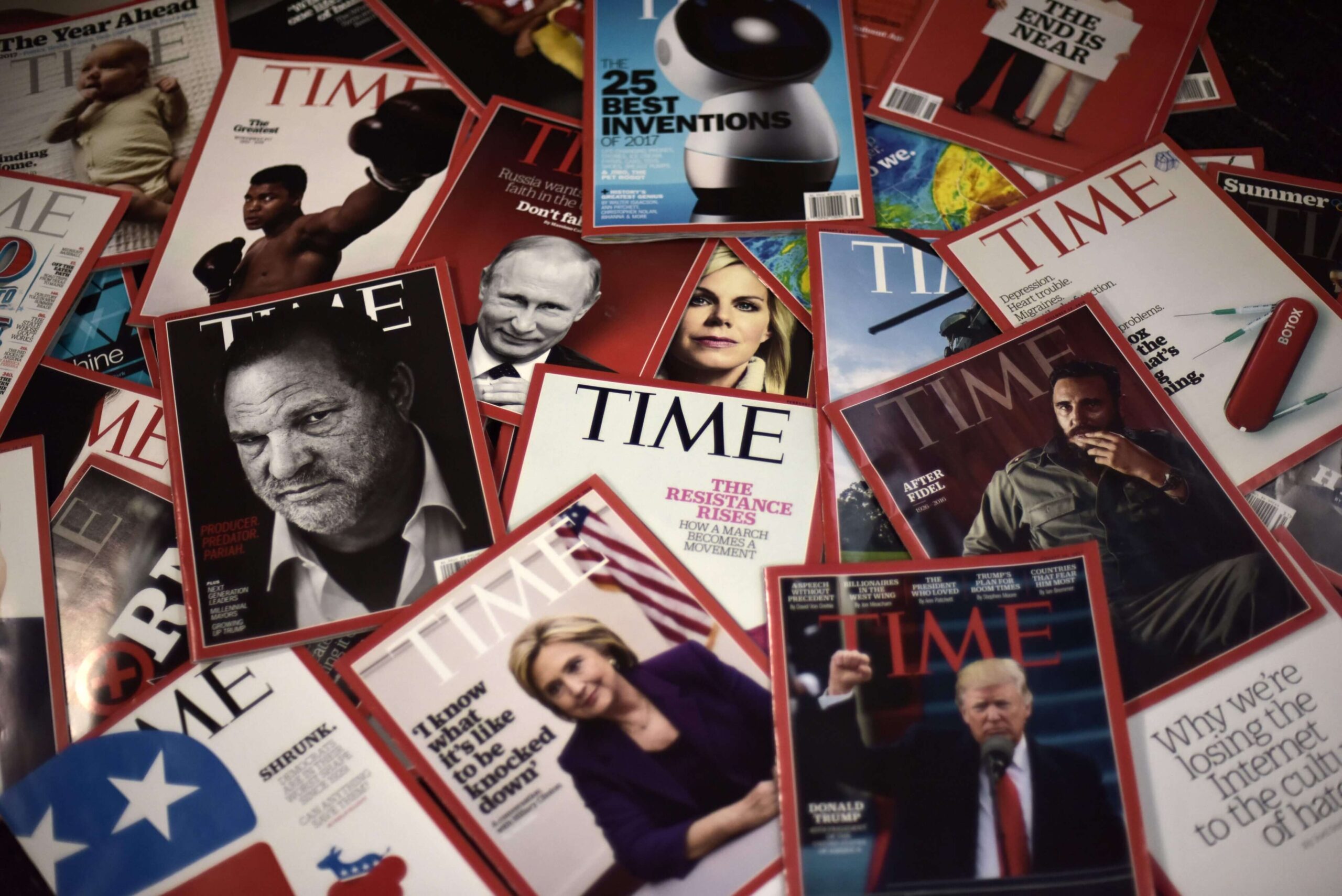
As you may have guessed, if you agreed with any of the above, you’re wrong—at least according to Time Magazine, which recently published its list of “America’s Best Companies of 2026.” No Tesla. No SpaceX. No Walmart or Exxon. But there’s Disney, slotted in at No. 44, just above Visa and Morgan Stanley and just below Oracle and Lyft.
Inarguably, Time’s list does include some pretty great companies. Nvidia and Apple sit right at the top, about where one would expect them to be. Alphabet is in the top 10. Meta, Microsoft, and Amazon are all there. Still, the list seems rather incomplete and a bit fatuous. Why, for example, are no energy companies included? At the moment, while hostilities rage in the Middle East and the Strait of Hormuz is, again, treacherous to traverse, American energy is at least keeping the world from collapsing into recession. Similarly, it seems strange that Bank of America would find its way into the No. 33 position, while JPMorgan Chase is slotted in 22 spots lower. Not only is JPMorgan the bigger bank, but it also just reported record earnings across all business lines. What makes BofA 22 spots better?
And therein lies the rub. Time presents this as an objective list, one based on calculations made by a qualified market statistics company, Statista. It’s a clear, statistically based survey that presents impartial results. Yet, valuable data—like JPMorgan’s record-setting performance—are apparently irrelevant, totally inconsequential in this assessment of corporate greatness.
To clear up this confusion, one must first understand how it was compiled, why Time decided to compile it that way, and perhaps most importantly, what the magazine likely hoped to accomplish in doing so. In short, this is all about “variable selection” and the effect that it has on even the most rigorous-appearing statistical results.
Given all of this, the best place to start with this survey probably isn’t the list of companies, but with the link titled: “Methodology: How TIME and Statista Determined America’s Best Companies of 2026.” Here, we find the three primary criteria used to determine which companies are best: “The first dimension,” Time notes, is “Employee Satisfaction,” and that score “is based on survey data from a large sample of approximately 217,000 employees from U.S. companies over the last three years.” OK. That makes sense. Companies are unlikely to be “great” if their employees are unhappy. Next up, Time continues, is “Financial Performance,” which “was assessed using data from Statista’s revenue database, which contains company financial data for the last five years.” Again, this is perfectly reasonable. Companies have to perform to be great. And then, finally, the kicker:
The third dimension, Sustainability Transparency, was evaluated based on ESG data among standardized KPIs from Statista’s ESG Database and targeted data research. To formulate a comprehensive ESG index, multiple Key Performance Indicators were collected. For the environmental evaluation, this included the 2024 carbon emissions intensity and reduction rate compared to 2022, as well as the Carbon Disclosure Project (CDP) score. The social dimension assessed the share of women on the board of directors and the existence of a human rights policy. The governance dimension evaluated whether a company had a Corporate Social Responsibility (CSR) report adhering to the Global Reporting Initiative (GRI) guidelines and a compliance or anti-corruption guideline.
Ah. Of course. Now it all makes sense.
Corporate “greatness” can be measured using a host of different criteria. As I hinted at above (in the sentence on Disney), my personal preference would be to include a variable that calculates return on shareholder investment. One could also devise a variable to measure positive impact on the country’s fortunes, for example, its contributions to the overall economy or to national security (see ExxonMobil). Really, the possibilities are endless, which is to say that choosing to make “sustainability transparency” one-third of a company’s overall score is a choice—and an overt and deliberate choice.
So then, why would Time make such a controversial choice?
This answer can be found near the top of the best companies list itself. Occupying the No. 3 position, just below Apple, is the global software company Salesforce. Salesforce is a great company, to be sure. Still, it’s had its share of problems over the last few years, including massive layoffs, a poorly and cruelly handled layoff strategy, an exodus of executives (among whom was the co-CEO) and a threatened proxy battle.
Lucky for the good folks at Salesforce, its CEO and board chairman is Marc Benioff, who co-founded the company in 1999. Benioff is a rich man, with an estimated net worth of $7.5 billion. What that means is that, in 2018, it was no big deal for him to blow $190 million buying one of the nation’s oldest and most respected “news” magazines, a little operation called Time. Weird, right? The No. 3 company on the list of the nation’s best—which has struggled this year with slow growth and which has seen its own share price cut in half over the last three years—just happens to be the company started and run by the guy who also owns the magazine that compiled the list. What are the odds?
Well . . . given the criteria used to measure corporate “greatness,” the odds are actually pretty good. Benioff, you see, has long been a crusader for “stakeholderism,” or, as he likes to call it, “a new capitalism…a more fair, equal, and sustainable capitalism that actually works for everyone and where businesses, including tech companies, don’t just take from society but truly give back and have a positive impact.” This is the heart of ESG, and Benioff has never been shy about using his company’s money—which is to say, his shareholders’ money—to advance the cause. As I put it in my book about ESG, “The Dictatorship of Woke Capital”:
Benioff is known to be a devotee of Klaus Schwab, the German engineer and economist who founded the World Economic Forum….As a Schwab enthusiast, Benioff has made it his business to ensure that anyone who has anything to do with his company—all the stakeholders, you might say—contribute equally to his favored political and social causes. “At my company, Salesforce,” Benioff wrote, “we baked philanthropy into our business model from day one, leveraging one percent of our technology, people, and resources to help nonprofits around the world achieve their missions.” In practice, what this means is that Benioff has given away “more than $100 million in grants . . . more than 1.1 million [employee] volunteer hours and . . . products to more than 27,000 organizations.” Just to be clear…Benioff is worth more than $7 billion, which means that $100 million would be about 1.4 percent of his personal wealth. But he’s had his “shareholders” give that money away instead. Just because he can.
Now, just to be clear, I’m not saying that Benioff’s company (Time) doctored the numbers to make his other company (Salesforce) look “great.” I am not even saying that Time carefully and purposefully chose the variables by which it would measure greatness specifically to ensure that Salesforce appeared to be a truly great company—although that may well have been the case. What I am saying is that this survey of the nation’s greatest companies is both nonsensical and evidence of the problems that plague our mainstream media.
As I argued in these pages recently, the media has long been one of the political left’s most valued targets in its “war of position,” its effort to influence the culture by controlling the institutions of cultural transmission. And Benioff’s acquisition and subsequent usage of Time is a prime example of how this war of position works in practice and, more to the point, how successful it has been. I don’t know why Marc Benioff bought Time. It may be the case that he bought it with pure intentions, not planning to impose his ideological beliefs in any way. Indeed, I think that’s probably the case. But that’s just all the more damning. All that proves is that his—or anyone’s—personal intentions are irrelevant. The media, as it has come to see itself—as the arbiters of the accepted “narrative”—serve as proof of Robert Conquest’s Second Law: any organization not explicitly and constitutionally right-wing will sooner or later become left-wing.
Or to put it more simply: Marc Benioff didn’t buy Time to impose his personal beliefs on the magazine. He bought it because the magazine already reflected his personal beliefs. He bought it because he perceived that he and it had shared values and, as a result, shared goals. He bought Time magazine to guarantee that it would be around for years to come, publishing such things as “straight news” lists of the best companies in America.
ESG is a controversial investment/business strategy, to say the least. That doesn’t mean that anyone who uses it or believes in its importance is evil or necessarily opposed to capitalism. They define capitalism differently, however, in terms similar to Marc Benioff’s. They see it as the means by which to accomplish ends that cannot be accomplished via politics. In this, they are right, even as they are mistaken about the mechanisms by which capitalism works. It is not a top-down process in which a select few men and women get to decide how wealth is created and distributed. It is, rather, a bottom-up process that, when allowed to function freely, creates wealth enough for most of society. ESG short-circuits that bottom-up process, replacing it with the top-down version. Ultimately, that proves unsuccessful and undermines the very foundations of the system.
Companies should not be measured by their compliance with this self-destructive impetus. True greatness is evident in organizations that, first and foremost, serve their purpose, in this case, generating wealth for a widely dispersed and diverse collection of owners, their shareholders.
Read more ‘Art’ and the Pathology of our Age