Back in January, Robert F. Kennedy Jr. did something amazing, something I and many others had been hoping he would do. He turned the food pyramid on its head. Or, rather, he turned it the right way up—finally, at long last.
“For decades Americans have grown sicker while healthcare costs have soared,” Kennedy told the assembled press at the White House.
“The reason is clear: The hard truth is that our government has been lying to us to protect corporate profit-taking, telling us that these food-like substances were beneficial to public health.
“Federal policy promoted and subsidized highly processed foods and refined carbohydrates and turned a blind eye to the disastrous consequences. Today, the lies stop.”
The message of the new guidelines is simple: prioritize real foods, especially animal foods, and avoid food made in factories. Eat more protein, eat more saturated fat and cholesterol—the precise foods you were told not to eat before—and eat far fewer grains and carbohydrates, especially of the refined variety. Ditch vegetable and seed oils.
Bottom became top, and vice versa.
Meat was always an essential part of a healthy diet. We just forgot. Our ancestors didn’t need to be told, but right about the time we decided to abandon the wisdom of ages, it was codified and demonstrated, beyond doubt, by a dentist called Weston A. Price in his remarkable book Nutrition and Physical Degeneration (1939). By the 1920s, the long march of industrial foods had begun. The very first processed foods, like refined-wheat products, canned goods, preserved fruits, and syrups, were starting to be eaten in large quantities. The effects were dismal and immediate. At home in Cleveland, at his dental practice, Price saw patients whose mouths were riddled with decay, but not just that. The effects were most pronounced in the children he saw. The very structure of their faces was giving way: jaws, cheeks, and noses were crumbling, marring their appearance and affecting their health in various ways. Many couldn’t breathe properly, and some even suffered behavioral problems too.
Price knew, quite sensibly, it was the novel industrial foods his patients were eating, so after some years he set out on a globetrotting adventure to prove it. He wanted to show that refined industrial diets couldn’t provide the nutrition humans need to develop “perfect health.” For that, he had to find control groups of people who had never eaten a factory-produced food in their lives. Traveling from the Arctic to the islands of the South Pacific, via the Highlands and Islands of Scotland, the Swiss Alps, and the Nile plain, Price encountered small-scale, traditional societies who still cleaved to the ways of their ancestors and ate the same foods, prepared in the same ways. Their faces were beautifully proportioned, they grew up tall and well-muscled, athletic, hale, and hearty. They showed remarkable resistance to disease. Common to all their diets, however much they varied, was an emphasis on nutrient-dense animal foods: fatty cuts of meat, organ meat, blood products, fat products like butter and lard, dairy, eggs, shellfish, and seafood. This was the right way to eat and live.
I often say it, but had Weston Price’s book become the standard textbook for American nutritionists in the 20th century, Make America Healthy Again wouldn’t need to exist. Rates of chronic disease would not have exploded in the way they have, and America would not be the sickest nation on earth, plagued with autism and ADHD, cancer, obesity, diabetes, and irritable bowel syndrome.
So meat is now very much back on the menu, and not a moment too soon. But there are a number of potential flies in RFK Jr.’s delightfully musty tallow-based ointment. One of them is quite unexpected: the growing incidence of meat allergies.
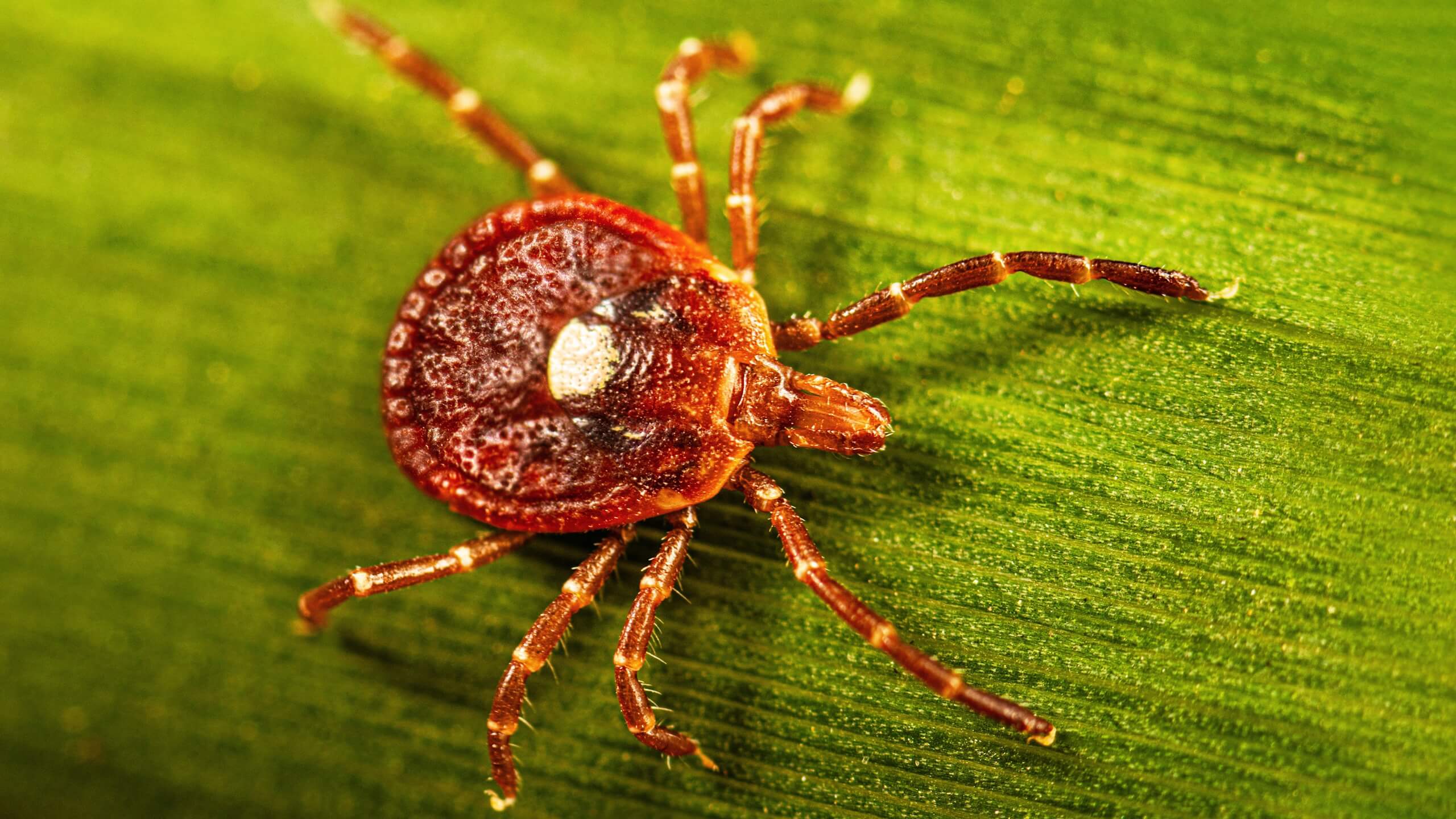
Tens of thousands, probably hundreds of thousands, of Americans may now have a meat allergy. It’s exactly what you think it is. You eat red meat—beef, pork, lamb—and you suffer an allergic reaction. The technical name is alpha-gal syndrome, which refers to a sugar molecule (alpha-gal) that’s found only in red meat. The allergy is transmitted by the lone star tick, so-called because it has a little star on its back. The tick bites you and introduces a compound into your bloodstream that resembles alpha-gal. The immune system reacts to the compound, and—congratulations! Now you can’t eat meat.
If you do, symptoms of the allergy can be relatively mild, but they can also be very unpleasant: nausea, vomiting, and diarrhea. Many won’t know they have the condition because they’ll eat meat with other things, as most people do, and attribute whatever symptoms they have to undercooking or contamination or the meal as a whole.
But the condition can also kill, and it has. In 2024, the U.S. saw the first recorded death from alpha-gal syndrome. A 47-year-old man from New Jersey collapsed and died within hours of eating a hamburger at a barbecue. After his autopsy proved inconclusive, his wife contacted experts at the University of Virginia. They tested blood samples and found the victim had been sensitized to alpha-gal and that he had died from a massive allergic reaction. The researchers asked the wife whether her husband had been bitten by a tick. Yes, she said, he had been bitten on his ankles about a dozen times that summer by chiggers—probably juvenile lone star ticks. Mystery solved.
A second death was announced more recently, of a much younger Australian man.
We’ve only known about alpha-gal syndrome since the early 2000s, when patients taking part in a trial of a new cancer drug began experiencing severe allergic reactions. Most were in the southeastern U.S., a region of the country with large populations of lone star ticks. The earliest case involving the drug was in 2002, but the link to red meat wasn’t made until the end of the decade. Researchers were then able to identify cases stretching back into the 1990s, and they also found anecdotal reports of meat allergies even earlier than that, including in Australia.
The CDC now estimates that around 500,000 Americans suffer from alpha-gal syndrome. Over a 12-year period, between 2010 and 2022, almost 110,000 cases were detected. But the true figure could be much larger. Testing and awareness may be growing—there was a glut of newspaper stories last year—but we’re still in the early stages of really grappling with the condition.
Read more Pentagon Strips James Clapper’s Name From DIA Auditorium
New research suggests as many as 1 in 4 adults in some states now carry antibodies—evidence of a prior immune reaction—for alpha-gal. Researchers tested thousands of blood samples collected between November 2024 and April 2025 from residents of ten states.
The results showed that states with established populations of lone star ticks had the highest percentages of people with antibodies for alpha-gal. Arkansas had the highest levels, with almost 1 in 3—31 percent—of residents carrying the antibodies. Then followed Missouri, with 26 percent.
In five states—Arkansas, Missouri, Kentucky, Tennessee, and Virginia—1 in 4 people could be expected to test positive for alpha-gal antibodies.
The groups with the highest likelihood of having antibodies were older people (55-64), men, and people living in rural areas—as we might expect.
It’s worth remembering that we’re talking about antibodies, which are evidence of a previous immune response to the sugar. This doesn’t mean 25 percent of all people in Arkansas, Missouri, Kentucky, Tennessee, and Virginia have alpha-gal syndrome. What it does mean, though, is that 25 percent of people in those five states have been bitten by a lone star tick and their immune systems are now sensitized to red meat.
The problem: We simply don’t know enough. Does sensitization always develop into the full-blown syndrome? If not, why not? We need more research, fast. We need to know how the condition progresses and if there are triggers that cause it to progress and for symptoms to appear. Pregnancy, for example, can trigger the emergence of a wider variety of “dormant” allergic conditions, including eczema, rhinitis, and even new food allergies, like celiac disease and gluten intolerance.
We need to understand more about the spread of the condition. And, of course, we need to discover ways to stop it: ways to reduce or eliminate lone star tick populations and ways people can avoid being bitten in their own gardens and while enjoying America’s fields, forests, and national parks—and what they should do if they are bitten.
Matters are somewhat complicated by the evidence that the U.S. government has spent the last 70 years of research researching the weaponization of ticks and tick-borne diseases, at places like Plum Island, close to where the very first case of Lyme disease was ever recorded (Lyme, Connecticut). Gain-of-function research into rare tick diseases, like Crimea-Congo hemorrhagic fever (CCHF), is taking place on U.S. soil, right now, with USDA funding. CCHF has a mortality rate of up to 40 percent and spreads among livestock but can also spread between humans. The main research centers, in Texas and Kansas, are being used to study the transmission of the disease in livestock and develop new mRNA vaccines against it. The virus has never been found in the U.S., so of course a vaccine is needed, and since you need livestock to do it, why wouldn’t you do the research close to two of the most important hubs for livestock in the U.S.? It makes perfect sense—to somebody, at least.
And matters certainly aren’t helped by statements like those of Princeton bioethicist S. Matthew Liao. This strange little man has made the serious claim that humans should be bioengineered to be allergic to meat—to save the planet from climate change, of course. Liao also said humans should be shrunk by 25 percent to reduce their carbon footprint, quite literally. You’ve probably seen the videos of him on X.
I may be wrong, but I don’t think alpha-gal syndrome has anything other than a natural origin. Its spread across the U.S. can be explained, more or less entirely, in terms of the huge growth of white-tail deer and wild turkey populations, the lone star tick’s main hosts or “reservoirs.” Conservation and reforestation, as well as a warmer climate, have allowed the ticks to increase their range enormously and to come into contact with humans far more frequently. The number of deer per square mile on Martha’s Vineyard has doubled in a decade. Over 500 cases of alpha-gal syndrome were reported there in 2024 alone.
Many of the tools we might use against the lone star tick already exist or are in the process of being tested and refined. There’s innovative research taking place to control the spread of mosquito-borne diseases, including the introduction of bacterial species into populations to make them sterile, the use of CRISPR gene editing, and even the use of tiny killer drones to obliterate them in mid-air. Similar work, with far less publicity, is also taking place for ticks. At present, most of it focuses on controlling Lyme disease. There are vaccines against the disease itself and also vaccines that make ticks dismount or block the release of the Lyme pathogen. There are also attempts to target reservoirs for Lyme disease, like white-footed mice, and to genetically modify ticks and stop them from reproducing.
All of these methods could and indeed should be turned towards preventing the spread of alpha-gal syndrome. Every American deserves the right to eat red meat without guilt and without the possibility of a very painful trip to the toilet or worse.