








When I ran hurdles and sprints in high school, my racing flats and my spikes both had the swoosh on them. Nike was not a political statement. It was the coolest brand on earth, and the goddess of victory painted on the side of your shoe told you exactly what you were supposed to do with it: win. That was the whole pitch. Just Do It did not ask what you believed. It asked how fast you could run.
Read more Book Review: A Very Convenient Warming
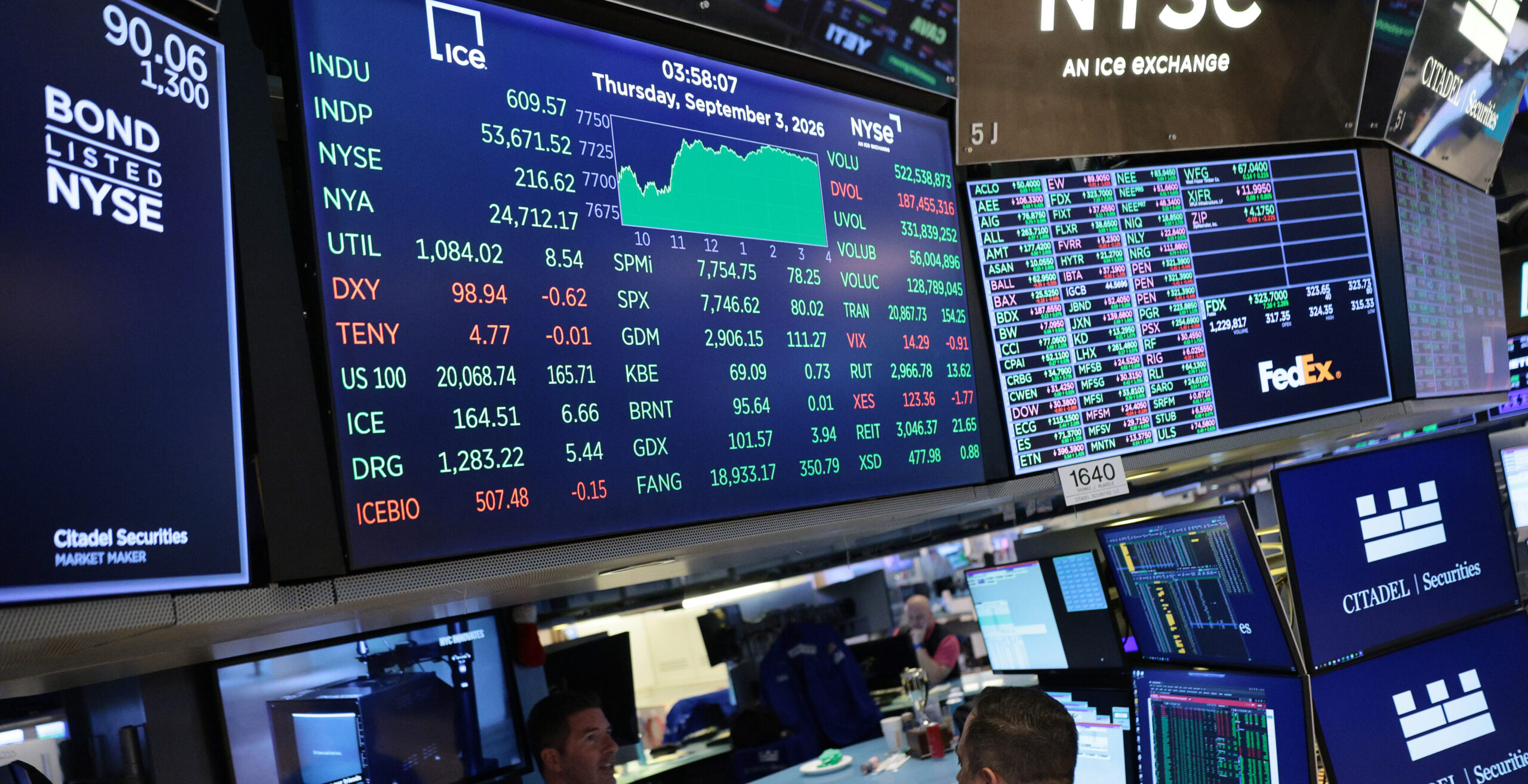
Nike is losing that argument now, and Wall Street has the receipts. The company drops out of the S&P 100 index this month for the first time in nearly 18 years, a casualty of a stock that has fallen roughly 78 percent from its November 2021 peak and wiped out more than $200 billion in market value along the way. A brand built on winning has spent the better part of a decade lecturing its customers instead, and the market is finally sending the bill.
Go back to 1990, when Michael Jordan, already Nike’s signature athlete, declined to endorse Democrat Harvey Gantt over segregationist Republican Jesse Helms in North Carolina’s Senate race. Jordan later admitted, half joking, that he told teammates, “Republicans buy sneakers, too.” He never fully walked it back, because the logic behind it was simple: a brand that wants everyone’s money does not pick a side. Jordan sold shoes to Republicans, Democrats, and everyone who just wanted to be like Mike. That was the model that built Nike into the biggest sports brand on the planet.
That era had a soundtrack. Ronald Reagan was closing out the Cold War, the Soviet empire was collapsing, and the country was in the mood to celebrate winning again. Rocky IV had Sylvester Stallone beating a Soviet superman on national pride alone. The 1980 Miracle on Ice never stopped playing on a loop. Nobody wanted a brand to explain why winning was problematic. They wanted to feel like Michael Jordan or that hockey team, unapologetically great. Nike sold that feeling better than anyone alive.
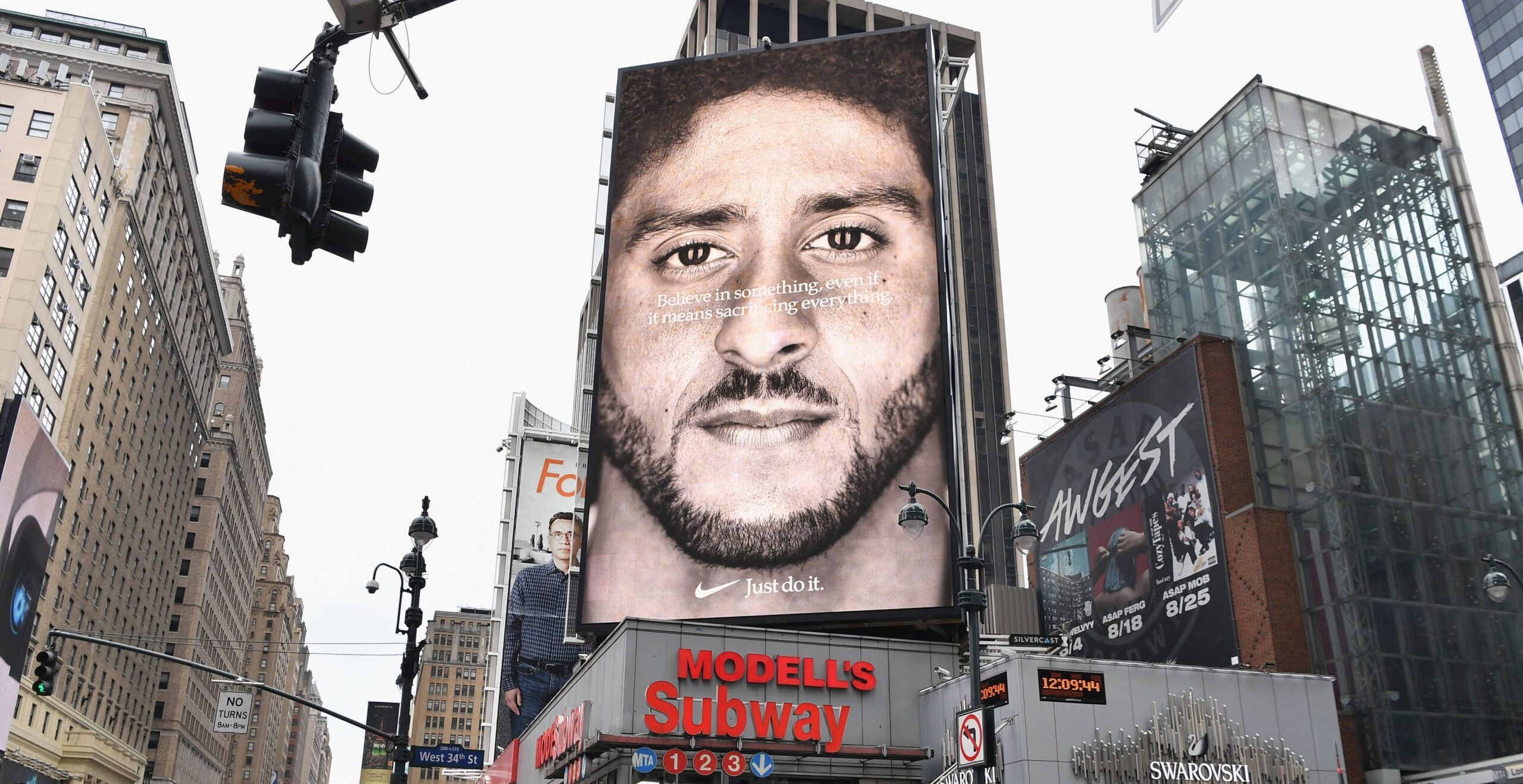
The pivot away from that model has a precise start date. On September 3, 2018, Nike unveiled Colin Kaepernick as the face of the 30th anniversary “Just Do It” campaign, with the tagline “Believe in something. Even if it means sacrificing everything.” Whatever you think of Kaepernick’s protest, the ad was not selling shoes. It was selling a side, and Nike has doubled down ever since. Megan Rapinoe became a recurring face of Nike’s activist messaging. In April 2023, Nike signed transgender influencer Dylan Mulvaney to model its sports bras, days after a similar Bud Light partnership blew up in Anheuser-Busch’s face. Former college swimmer Riley Gaines called the deal “a sad mockery of what being a woman entails” and said Nike’s message to women and girls was that “men can do everything better.” She has not bought Nike since.
That last example cuts deeper than most people realize, because Nike’s own history undercuts the empowerment branding. Track star Allyson Felix has said Nike moved to cut her sponsorship by 70 percent after she got pregnant, the kind of real, unglamorous obstacle female athletes actually face. Nike found the money and the marketing budget for a biological male modeling a sports bra. It could not find the same enthusiasm for one of its own female champions starting a family. If you are going to build a brand on standing up for women, that is the sort of thing that should bother you more than a Twitter boycott does.
Read more The Democrat Party and Its Supporters Are a Hive, Part Two
None of this happened in a vacuum. Target’s 2023 Pride collection sparked a boycott that CEO Brian Cornell later admitted, on an earnings call, hurt second-quarter sales through a “negative reaction” from customers. Anheuser-Busch’s Mulvaney partnership cost Bud Light its position as America’s top-selling beer for a stretch, though the company has since clawed back much of its market value by returning to what it does best: selling beer, not opinions. Gillette learned the same lesson in 2019 when its “The Best Men Can Be” campaign lectured customers about toxic masculinity, and Pepsi learned it in 2017 when an ad had Kendall Jenner defusing a street protest with a soda can and pulled it within a day under near-universal ridicule. Corporate America keeps rediscovering the same law of gravity: customers do not enjoy being scolded by the people trying to sell them something. Nike has had a harder time recovering than most, in part because sneakers are more of a fashion and identity purchase than a six-pack, and in part because the company kept doubling down years after the backlash should have been a warning.
Nike’s stock did not collapse for cultural reasons alone. The company overcorrected into a direct-to-consumer strategy that gutted its wholesale relationships with retailers, ceded shelf space to competitors like On and Hoka, and got hit hard by a 17 percent sales drop in Greater China along with new tariff costs. Serious people in the finance press have made that case, and they are not wrong. But none of that explains why a company that needed every possible customer chose, over and over, to alienate a meaningful share of them on purpose. Bad strategy and bad politics can both be true at the same time, and at Nike they were.
Give credit where it belongs: new CEO Elliott Hill, who took over in October 2024, seems to understand the diagnosis. Nike’s “Why Do It?” campaign, launched in 2025, drops the activist messaging and returns to the thing that made the swoosh valuable in the first place: athletes, competition, and the plain thrill of trying. Hill has called it a return to sport. It is really a return to basic math. Sports fans outnumber activists, and shoe buyers outnumber both.
The lesson here is not that companies should stay silent on everything, and it is not really about Nike specifically. It is that a business exists to serve customers, not to correct them. Every dollar a company spends telling half its market it is on the wrong side of history is a dollar it is not spending on a better shoe, a faster shirt, or the kind of ad that made an 80-year-old man jogging across the Golden Gate Bridge into an American icon. Go woke, go broke is a punchline until it hits your 401(k), and Nike shareholders have now watched more than $200 billion answer that particular joke in full.
My kids still have some old Nike gear from their football and rugby days. They never once asked me who I voted for. They just asked me to get to the line and go. Nike’s leadership finally seems to be rediscovering that the original pitch was the best one they ever had. Corporate America should take the hint before the market has to teach the lesson twice.