







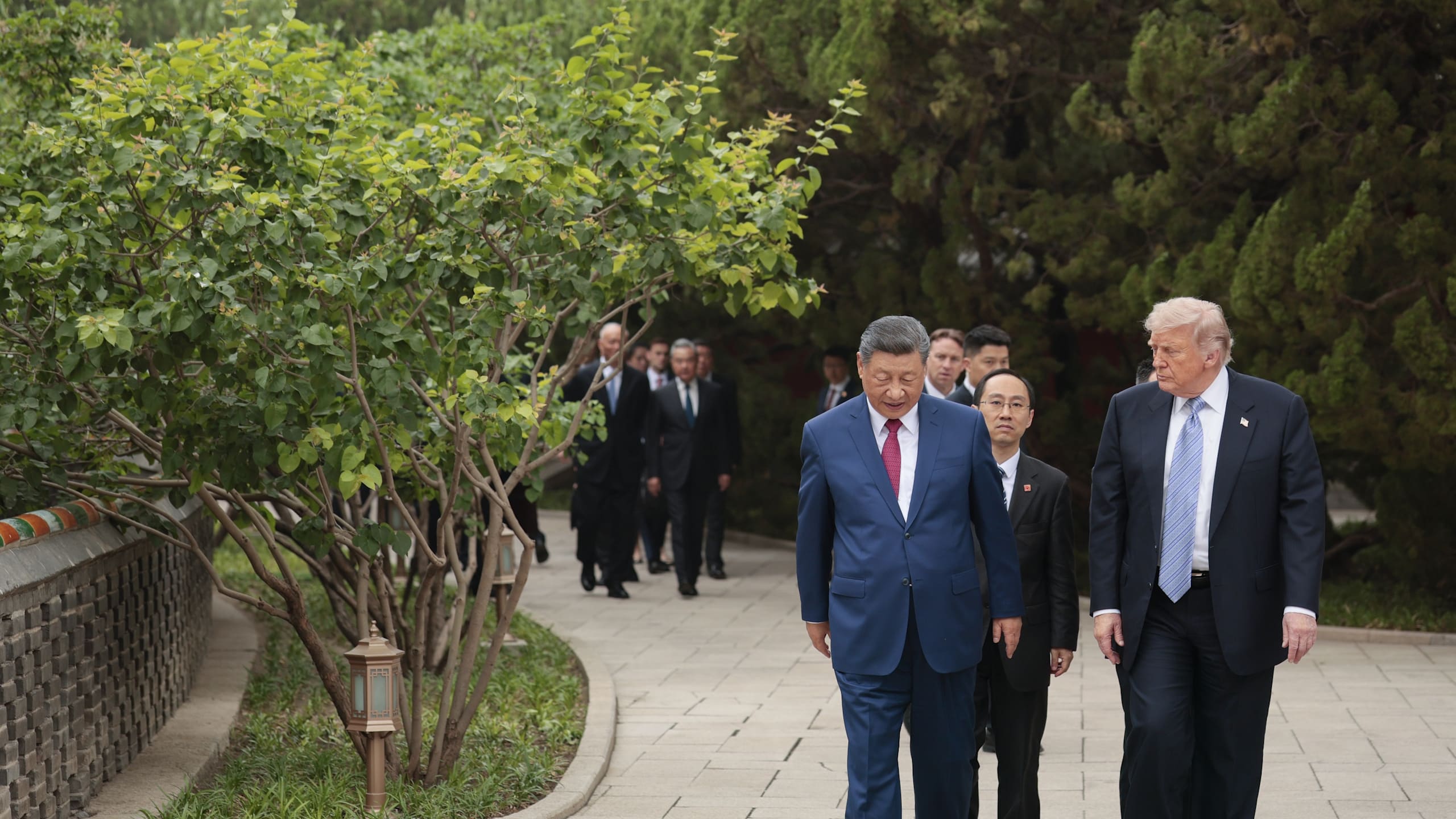
Xi Jinping is preparing to visit the United States. Washington will focus on artificial intelligence, tariffs, rare earths, supply chains, and trade. Behind these discussions lies a common assumption: China is still rising—a disciplined superpower capable of challenging America for decades.
Read more Artificial Intelligence and National Survival
That may be true. But Washington may also be repeating the mistake the West made with the Soviet Union.
After the Soviet collapse, briefly opened archives allowed Western intelligence officials to reassess decades of analysis. Richard Kerr, a former deputy director of the CIA, offered an ironic summary: “We tried to find out what the Soviet leaders knew. Finally, we found out that they did not know much. They didn’t even know that their country would soon collapse.”
Until the eve of that collapse, Western politicians, economists, and Soviet specialists concentrated on Moscow’s weapons, territory, and troops. They underestimated how economic stagnation and popular resistance had hollowed out the Communist system.
The totalitarian state’s information controls eventually blinded its own leaders. The KGB could crush dissidents but could not determine what the population believed. The Kremlin could mobilize armies yet failed to grasp that its system had lost the capacity to function. The state that appeared omniscient understood least of all its own weakness.
Today, overestimating China has become fashionable. Analysts debate whether it will surpass America in AI, dominate the twenty-first century, and shape humanity’s future.
Before Xi arrives, we should ask whether we are again imagining an authoritarian state to be stronger than it is. How much does Xi know about China? Does he understand the public mood? Are the reports reaching his desk honest accounts—or numbers polished by bureaucrats protecting their careers?
The collapse of China’s real estate market offers one warning. Over three decades, the country experienced the largest urbanization drive in history. Tens of millions entered the middle class as cities expanded and property values soared. No reliable estimate tells us how many homes were built or how many now stand empty. Real estate came to represent most household wealth. Falling prices may have erased 30 percent of middle-class paper wealth overall and as much as 60 percent in the hardest-hit areas. China’s shrinking population, partly a legacy of its one-child policy, makes a sustained recovery even less likely.
How much resentment has this created? China has no free elections, independent press, or open system for measuring public opinion. Citizens cannot punish the government at the ballot box and have few safe ways to express anger. Silence is easily mistaken for support, and endurance for loyalty.
The property crisis has also shattered local government finances. Because land is state-owned, local authorities leased land-use rights to developers and collected related taxes. For more than two decades, China’s local party-state fed on land sales. That revenue financed highways, high-speed rail, new cities, and extravagant government buildings.
Read more Scores on PISA Are Leaning the Wrong Way
Now developers are failing, land no longer sells, and local governments have lost their principal source of revenue while accumulating debts estimated at well over $10 trillion. Xi has told them, in effect, to solve their own problems. But how can they repay their debts when the system that sustained them has collapsed? If Beijing refuses to rescue them, local finances will deteriorate. If it intervenes, the central government inherits a fiscal black hole.
Repeated anticorruption purges have, meanwhile, left officials afraid to act—or report bad news. Retired cadres are investigated for decades-old conduct, while family assets at home and abroad may be pursued.
Pessimism is especially widespread among the young. Official figures put urban unemployment among 16-to-24-year-olds, excluding students, near 19 percent. Many postpone unemployment by attending graduate school. Others return home, deliver food, or drive ride-hailing cars despite holding university degrees. They may earn money, but they lack stable careers, benefits, and hope.
The supposedly inexhaustible Chinese state now faces severe fiscal and social pressure. Yet the system is designed to conceal weakness. Officials filter bad news. Policy failures become “implementation problems.” Economic decline becomes “structural adjustment.” Unemployment becomes “flexible employment.” The supreme leader may appear to command the country while seeing only a stage set constructed by subordinates.
The famine that began in 1959 offers the grimmest precedent. Mao’s policies caused tens of millions of premature deaths, yet officials reported fictitious harvests, and China continued exporting grain. Foreign visitors saw staged prosperity while people starved. Some Western experts concluded that famine was impossible: How could a country exporting food be hungry?
They failed to understand that an authoritarian government can export grain while its people starve—and maintain a vast intelligence apparatus while remaining ignorant of the most important facts.
That is the Soviet lesson Washington should remember. America must not underestimate China’s military, technological, or industrial power. But neither should it mistake propaganda, grand plans, and surveillance for genuine strength. The more severely a system punishes bad news, the more likely its rulers are to inhabit an information vacuum.
Chinese history offers its own warning. The Chongzhen emperor, the last Ming ruler, continued demanding solutions to an irretrievable crisis until rebels entered Beijing. Only when he arrived at court and found his officials gone did he understand that his dynasty was finished. That day, he hanged himself from a tree on Coal Hill.
As Xi comes to America, the West must judge not only how powerful China is but also how brittle it may be. Despite Xi’s immense authority, we cannot know whether he understands his country better than ordinary Chinese—or worse.
Read more Trump Blasts ‘Globalist’ ICC, UNESCO, and Human Rights Council in UN Address


