








A family piano can be one of the most meaningful possessions in a home, but its relocation presents a challenge that goes beyond protecting the instrument itself. Hardwood flooring is particularly vulnerable to scratches, dents, scuffs, and pressure marks when a heavy piano is moved across a room or through a doorway.
The safest approach is to plan the entire route before the piano is lifted. Pro Movers and Storage can help coordinate specialty handling, with https://promoversandstorage.com/ offering moving support for households dealing with demanding furniture and specialty belongings.
Inspect the Piano and the Moving Route
Before moving day, examine the piano and identify the exact path it will follow. Measure doorways, hallways, corners, thresholds, and any areas where the instrument will need to change direction.
Look for Potential Floor Hazards
Hardwood floors may already have uneven boards, loose transitions, or areas that are more vulnerable to pressure. Remove rugs, decorative objects, and other obstacles from the route.
Pay particular attention to narrow spaces where movers may need to reposition the piano. Trying to rotate a heavy instrument in a confined area can increase the chance of dragging or tipping.
Heavy Specialty Item Piano Movers can assess the route in advance and determine which equipment and handling methods are appropriate for the specific piano and property.
Create a Protective Surface
Hardwood should never be treated as an afterthought. Before the piano begins moving, the travel path should be prepared with suitable protective materials.
Cover the Entire Working Area
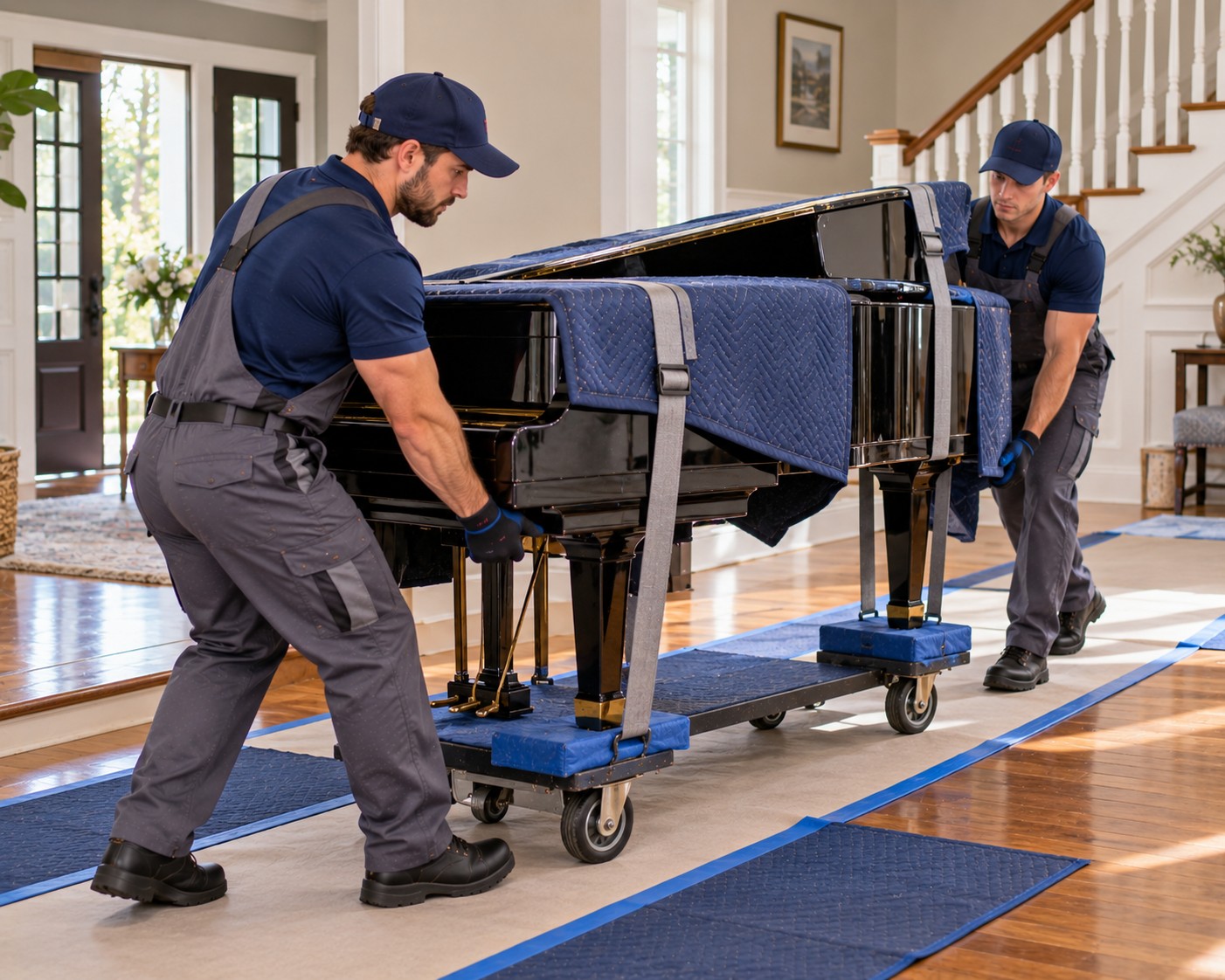
Protective floor coverings can help reduce contact between moving equipment and the finished wood surface. The material should remain secure and flat so it does not become a tripping hazard.
Do not rely on a thin household blanket placed loosely beneath a piano. A heavy instrument can shift the material or compress it against the flooring. Professional movers can use equipment designed to distribute weight and maintain controlled movement.
Prepare the Piano Before Lifting
The piano itself should also be prepared. Close and secure the keyboard cover, protect vulnerable exterior surfaces, and make sure removable components are properly handled.
Avoid Improvised Lifting Techniques
A piano’s weight is not distributed like that of a standard cabinet. Attempting to lift it with insufficient people or inappropriate equipment can place excessive pressure on its legs, casters, or frame.
Professional piano movers use coordinated techniques and suitable tools to control the instrument. Depending on the piano and route, equipment may include specialized dollies, straps, padding, and ramps.
The goal is to move the piano without allowing uncontrolled contact between its wheels, legs, or base and the hardwood surface.
Pay Attention to Thresholds and Doorways
Even when the main floor is well protected, thresholds can create problems. A small change in floor height can cause equipment to catch or a heavy object to shift unexpectedly.
Move Slowly Through Tight Areas
Communication is essential whenever the piano approaches a doorway or corner. One person can guide the direction while others maintain the weight and stability of the instrument.
Heavy Specialty Item Piano Movers understand that controlled movement is more important than speed. A few extra minutes spent repositioning equipment can prevent a scratch that may require costly floor refinishing.
Protect Both the Piano and the Walls
Hardwood is not the only surface at risk. Doorframes, baseboards, painted walls, stair rails, and furniture can also be damaged during a piano relocation.
Use appropriate padding around the piano and protective materials in areas where the instrument may pass close to walls. Clear nearby furniture before the move begins so the team has enough room to work.
Pro Movers and Storage can coordinate the handling of heavy specialty belongings while taking the surrounding property into consideration. This is particularly useful when a family piano must travel through several rooms before reaching the exterior entrance.
Plan the Destination Before the Piano Arrives
The new location should be prepared before the piano leaves its original position. Clear the final area, protect the floor, and make sure there is enough space for positioning.
Avoid making the movers repeatedly shift the piano after it has been placed. Decide its orientation in advance and consider nearby furniture, sunlight, heating vents, and walking paths.
Once the instrument is positioned, inspect the surrounding hardwood for any signs of contact or damage. The piano may also require tuning after transportation because changes in environment and movement can affect its sound.
Moving a family piano across hardwood floors requires more than physical strength. Route planning, floor protection, specialized equipment, and careful coordination all contribute to a safer relocation. With experienced Heavy Specialty Item Piano Movers handling the demanding parts of the process, families can protect both the instrument that holds their memories and the hardwood flooring beneath it.