






Sundar Pichai runs Google. Satya Nadella runs Microsoft. A long roster of Fortune 500 companies answers to executives who were born and educated in India before building their careers in the United States. Indian Americans hold the highest median household income and the highest rate of advanced degree attainment of any ethnic group in the country. Taken together, these facts create a powerful impression: that India itself must be a wellspring of exceptional human capital, a civilization quietly engineering brilliance on a national scale.
Read more Remembering the False Gloom and Doom of the 1992 Elections—and the Upcoming Midterms
That impression falls apart the moment one looks past the diaspora and toward the country these leaders actually came from. India’s own education data, collected not by critics of the country but by its own government surveys and its most respected independent assessments, describes a system that is failing at the most elementary task a school can perform. Somewhere between the classrooms of Bihar and the boardrooms of Silicon Valley, an extraordinary filtering process is at work. Understanding that filter, rather than mistaking its output for the average, is the key to making sense of the paradox.
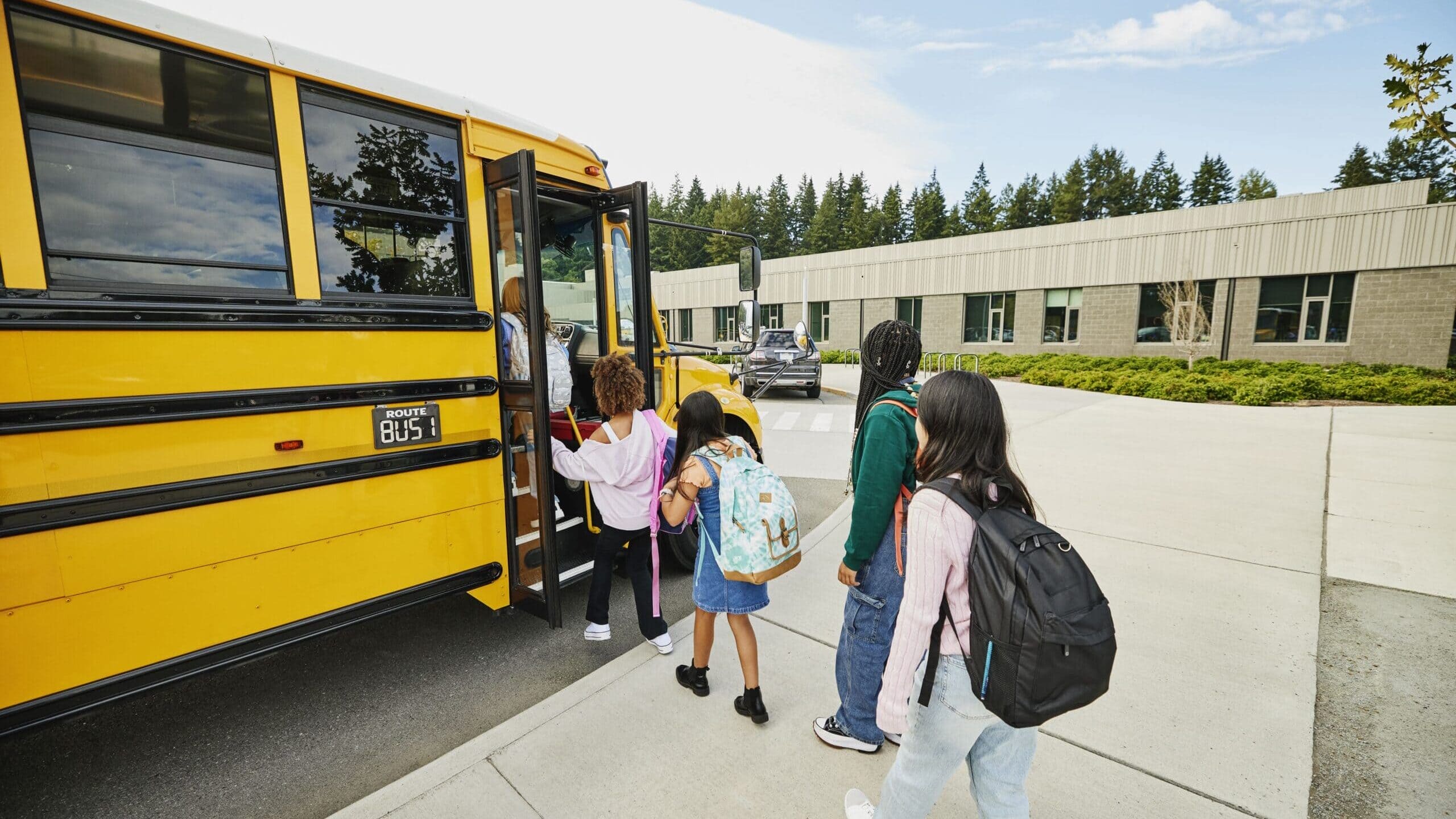
Consider first the achievement India is rightly proud of. The country has all but solved the problem of access. The recorded enrollment of 98.1 percent among children between the ages of six and fourteen [India’s Learning Crisis, p. 1]. Government figures compiled under the UDISE+ system for 2024 to 2025 describe a school network of 1.47 million institutions serving roughly 247 million students. Measured purely by the number of children who walk through a school gate each morning, India runs one of the largest and most inclusive education systems on earth.
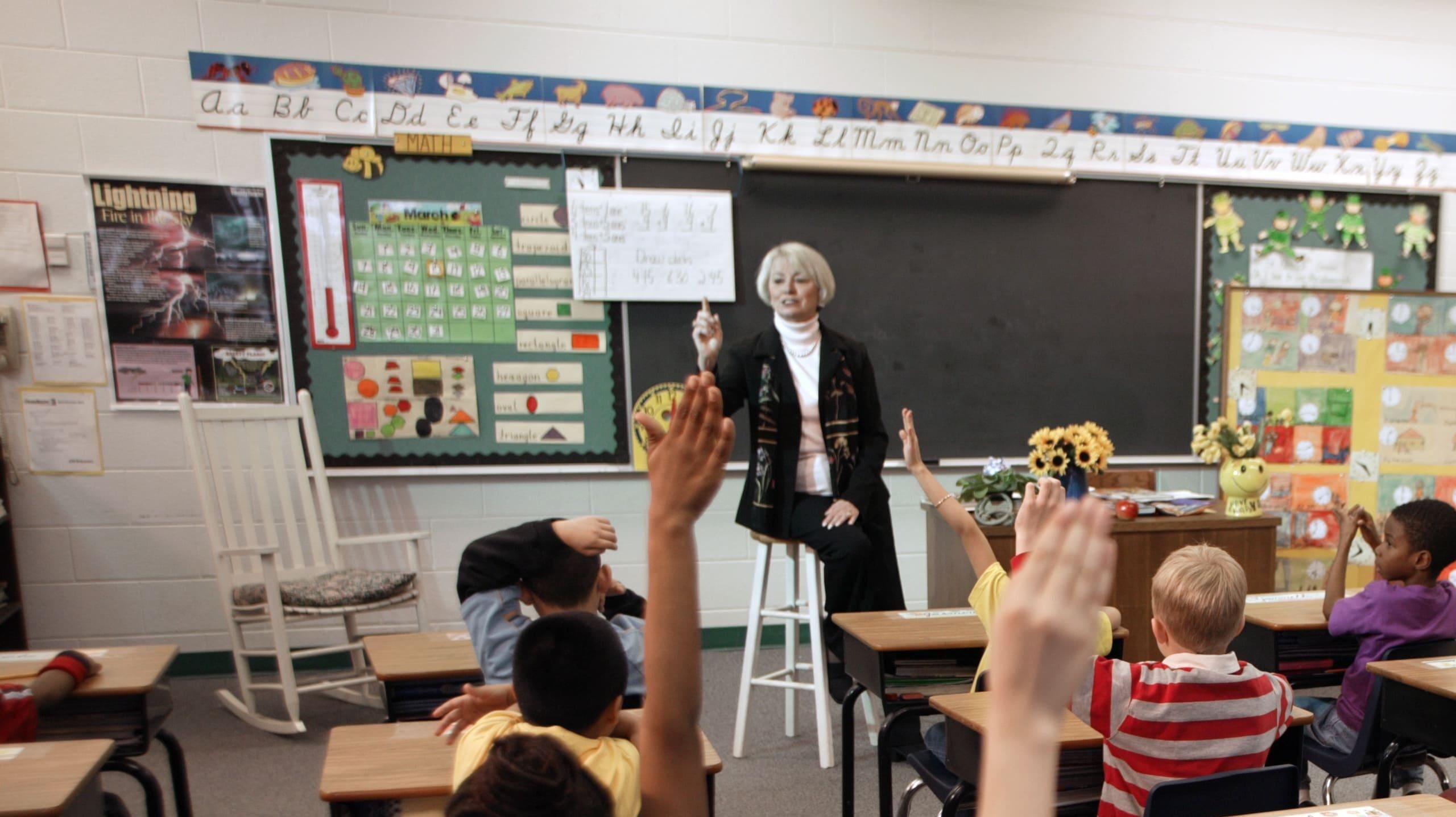
Yet walking through the gate turns out to be a poor proxy for what happens once the child is inside. The same 2024 survey, which reached nearly 650,000 children across more than 600 rural districts, of Standard III students in government schools could read a text pitched at the Standard II level, and just 27.6 percent could complete a simple subtraction problem [India’s Learning Crisis, p.1, p.5]. Put another way, after three full years of formal schooling, roughly three out of every four children in India’s government schools cannot read at the most basic grade-appropriate standard. This is not a footnote buried deep in a technical appendix. It is the central, headline finding of the country’s largest household-level assessment of learning.
What makes the picture still more troubling is that the gap does not close as children get older. It widens. India’s National Achievement Survey for 2021, a government-administered exercise that tested 3.4 million students across every state and union territory, found that the national proficiency score fell from 59 percent in Class III to 49 percent in Class V, then to 41.9 percent in Class VIII, and finally to just 37.8 percent by Class X. Mathematics followed an even steeper decline, dropping from 57 percent in Class III to a mere 32 percent by Class X.
Independent academic research on the crisis reports that nearly three-quarters of third graders in rural India are unable to work out a straightforward two-digit subtraction problem and that by the time those same children reach fifth grade, roughly half still cannot manage it. Moreover, , two-thirds of grade five students cannot calculate a three-by-one division problem.
The same body of research places India within a broader global pattern in which just over half of children in low- and middle-income countries are considered “learning poor,” meaning they cannot read and understand a simple story by the end of primary school. Seen against that backdrop, India’s numbers are not an aberration. They are close to the median for its income bracket, which is precisely the point: a country producing world-class technology executives at an outsized rate should not, in theory, sit at the median of anything.
Read more President Trump Sharply Lowers Biden-Era Fuel Economy Standards for Cars
If a deep well of domestic human capital really existed beneath the surface of these dismal averages, one would expect to see it emerge somewhere closer to home, in India’s own laboratories and research institutions rather than exclusively in Mountain View and Redmond. A recent geographic study of the world’s 200,000 most-cited scientists offers a way to test that expectation directly, and the result cuts against the high-human-capital story rather than supporting it. Bangalore, the city most often held up as India’s answer to a technology hub, hosted just 213 of these elite researchers in 2023, up only modestly from 187 in 2019.
Numbers on that scale are a rounding error next to the thousands clustered in Boston, New York, London, or Beijing. Delhi fared little better: its position in the global ranking of research cities improved from 162nd to 123rd between 2019 and 2023, a genuine gain, but one that still left the Indian capital, home to over 30 million people, far outside the world’s top tier of scientific centers. As of 2023, in fact, no city anywhere in the Global South outside of China had cracked the top 50.
The researchers behind that study describe what they observe in places like India as a “scattered mini-stars phenomenon.” Individual scientists occasionally reach genuine world-class prominence, but they remain too few and too dispersed to form the kind of dense, mutually reinforcing research clusters that define cities such as Boston or Beijing. That description could just as easily serve as a summary of India’s relationship with its own diaspora. The country is evidently capable of producing some brilliant individuals. But it lacks the human capital of China and the institutional depth, the funding, and the infrastructure needed to keep that brilliance working productively at home or to convert isolated stars into a self-sustaining domestic research ecosystem.
These findings tell a coherent story, one very different from the story implied by a scan of tech company org charts. India’s foundational education outcomes, whether measured through a household survey covering hundreds of thousands of children or through a nationwide assessment covering millions, point to a system in genuine crisis at the level where it matters most. Its scientific output, measured by where the world’s most-cited researchers actually work, shows a country punching far below the weight suggested by its population and by the reputation of its diaspora. Migration is the thread connecting these two facts.
The Indian professionals who rise to the top of Google or Microsoft are not a representative sample of what Indian schools produce; they are survivors of an unusually harsh selection process that runs through a small number of elite institutions and a handful of urban private schools, a process layered on top of a far larger system that most Indian children pass through without ever acquiring reliable reading or arithmetic skills. The brilliance on display in Silicon Valley is real, but it is the brilliance of people who escaped a broken system rather than evidence that the system itself is sound. To credit India’s education system with producing that brilliance is to mistake the sieve for the river, crediting the country of origin with a filtering effect that actually belongs to selective emigration layered on top of a foundational crisis that India’s own government data does not dispute.
Read more Caravan of 600+ Migrants Making its Way Through Mexico to the U.S. Border