




The past decade has witnessed a remarkable expansion in the historiography of slavery, with scholars dismantling the long-held assumption that the institution was primarily the preserve of white European men. Justin Marozzi’s Captives and Companions: A History of Slavery and the Slave Trade in the Islamic World (2025) has illuminated the vast networks of enslavement that stretched across the Muslim world for centuries. Stephanie Jones-Rogers’s They Were Her Property: White Women as Slave Owners in the American South (2019) demolished the comfortable fiction that white women were passive bystanders to Southern slavery, demonstrating instead their active, often brutal, investment in the system. Sean Stilwell’s Slavery and Slaving in African History (2014) has similarly complicated narratives that sanitize indigenous slavery in Africa. Together, these works reflect a growing scholarly consensus: slavery was so deeply woven into the fabric of human civilization across time and geography that almost all communities were touched by it, either as victims, participants, or both.
Jews were no exception. Yet whenever Jewish involvement in slavery enters public discourse, it generates a particular kind of heat. The reason is not hard to identify. Antisemitic propagandists, most notoriously the Nation of Islam’s 1991 publication The Secret Relationship Between Blacks and Jews, have weaponized partial and distorted evidence to portray Jews as the singular architects of the Atlantic slave trade, a claim that serious historians have comprehensively refuted. The understandable impulse to counter such libels has, however, sometimes produced an overcorrection, with scholars and popular writers minimizing or sidestepping Jewish participation in slavery altogether. The explosion of new scholarship on slavery’s universality now makes a more honest accounting both possible and necessary. Jews participated in slavery across multiple epochs and geographies. They did not monopolize it, did not invent it, and were in many settings minor players within systems overwhelmingly dominated by others. But they were participants, and that participation deserves a clear-eyed examination.
Perhaps the most persistent myth about Jewish involvement in slavery is the claim that Jews monopolized the slave trade in early medieval Europe following the collapse of the Western Roman Empire. This assertion turns out, on examination, to be less a historical finding than a historiographical artifact, a story that hardened into apparent fact through repetition rather than evidence.
Its origins can be traced to Henry Hart Milman’s History of the Jews, published in 1829. Milman, a clergyman writing for a popular audience rather than a scholarly one, asserted with great confidence but minimal citation that “one great branch of commerce fell almost entirely into the hands of the Jews, the internal slave trade of Europe,” and embellished this claim with lurid speculation about Jewish traders motivated by “revengeful satisfaction” against their former Christian rulers. What Milman presented as established fact rested on a selective reading of the German-Jewish historian Isaak Markus Jost, who had made the more modest argument that Jews were advantageously positioned for commerce during the upheavals following Rome’s fall, a claim about opportunity, not monopoly.
Milman provided none of the “ample evidence” he promised. He gestured toward papal edicts restricting Jewish slave ownership, but as subsequent scholarship has demonstrated, these documents require careful interpretation and cannot legitimately support claims of Jewish dominance, let alone monopoly, without “large and unwarranted assumptions.” His confident prose, aimed at a broad readership, transformed hints and suggestions in his sources into historical facts while concealing its indebtedness to those sources.
From there, the story spread rapidly. James Huie in 1840 repeated it almost verbatim, constructing fantasies about Jewish merchants deriving “savage satisfaction” from trading in human flesh. Philip Henry Gosse repeated it again with embellishments, and by the time Heinrich Graetz incorporated the claim into his monumental history of the Jews later in the century, it had acquired the authority of decades of uncritical repetition. Paradoxically, Jewish historians themselves sometimes adopted the motif, though typically in mitigated form. Katie Magnus, for instance, accepted that Jews were among the principal slave purchasers of the period but countered that they were the “kindest of masters,” a claim every bit as inventive as the accusations it sought to rebut. Joseph Jacobs, contributing to The Jewish Encyclopaedia at the turn of the twentieth century, treated the assertions as settled historical fact and added further speculative flourishes of his own.
Modern historians have effectively dismantled this edifice. The evidence for Jewish commercial dominance in the early medieval period is slender; the evidence for monopoly is nonexistent. What the documentary record actually shows is that Jews were among many traders operating in disrupted, fluid commercial environments, taking advantage of international networks and linguistic reach in ways that other merchants also attempted. The “monopoly” was a nineteenth-century construction, shaped by Christian supersessionist narratives, the politics of Jewish emancipation debates, and, in the case of Jewish historians who accepted it, a complicated pride in Jewish historical agency, however unflattering the specific episode.
When we turn to the early modern Atlantic world, the picture changes. Here, Jewish involvement in slavery is not a matter of myth or retrospective construction but of documented historical fact, though one that still requires careful contextualization. The is mercantile: the “Port Jew,” trading across political and linguistic boundaries, valued by colonial authorities for commercial networks that transcended national loyalties. This model captures something real. The long-distance networks of the Nação, the transnational community of Sephardic Jews and conversos, did give Jewish traders advantages in the Caribbean markets. Their trafficking in goods and slaves throughout the triangular commerce of Jamaica, Cuba, and Hispaniola was sufficiently threatening to non-Jewish competitors that it generated repeated anti-Jewish petitions to colonial authorities.
Even so, the mercantile image is incomplete and partly shaped by the anti-Jewish prejudices it reflects. The claim that Jews traded rather than planted was itself an eighteenth-century antisemitic canard, used to justify discriminatory taxation on the grounds that Jews refused to settle and cultivate the land. The reality was considerably more complex, and the story of the Gabay family of Jamaica illustrates that complexity in instructive detail.
The Gabay dynasty’s origins lie in Dutch Brazil. Salamão Gabay was born a New Christian in Portugal and embraced his ancestral Judaism in Amsterdam before joining the Dutch settlement of Pernambuco in the 1640s, where he traded in foodstuffs and slaves. Jews in Recife, where Salamão was active, played primarily a supporting role in Brazilian sugar planting, acquiring and reselling slaves and providing capital investment, rather than operating as direct plantation owners. As Arnold Wiznitzer’s historian’s estimate makes clear, Jews owned only around 6 percent of Dutch-Brazilian sugar mills, functioning more as financiers, brokers, and exporters, and as suppliers of enslaved Africans on credit to the engenhos.
Following the Portuguese expulsion of Jews from Pernambuco in 1654, Salamão eventually made his way to Jamaica, . There he laid the foundations for one of the island’s most enduring Jewish planting dynasties. By 1692, in the aftermath of the catastrophic Port Royal earthquake, Salamão was among 12 Jewish planters who petitioned the Crown directly, describing him as having operated a “plantation for many years in Magitt Savana.” His kinsman Abraham Gabay owned a plantation in “White Hood,” and Sarah Gabay appeared as the sole woman planter on the register. The Gabays were not outliers. They were responding to and participating in Jamaica’s transformation from a privateering economy into a sugar-based plantation society, a transformation that required and consumed enslaved African labor on a massive scale.
Across three generations, from roughly 1680 to 1740, the Gabays lived and planted throughout Jamaica. David Gabay the elder bequeathed his plantation in the parish of St. Thomas in the Vale to his son Isaac in 1720. Isaac, in turn, continued operating his father’s land and, in his will of 1730, made extensive provisions of enslaved people for his heirs, including a request that two slaves be purchased for his daughter Rebecca from the first “negro ship that arrives after my decease.” By the 1750s, the dynasty had expanded dramatically. Samuel, Isaac, and Solomon Gabay together owned and operated nearly 1,400 acres of land throughout Jamaica, including around 1,000 acres in St. Thomas in the Vale known as “Magotty Sugar Works.” These were not modest household operations but substantial sugar works dependent on large enslaved workforces, fully integrated into the industrializing brutality of mid-eighteenth-century Jamaican plantation agriculture.
The Gabay story underscores a point that recent scholarship has insisted upon: the categories of merchant and planter were not mutually exclusive, and the over-characterization of colonial Atlantic Jews as purely mercantile reflects not historical reality but “anti-Semitic libels of the eighteenth century” that have been, perhaps unintentionally, perpetuated even in sympathetic scholarship.
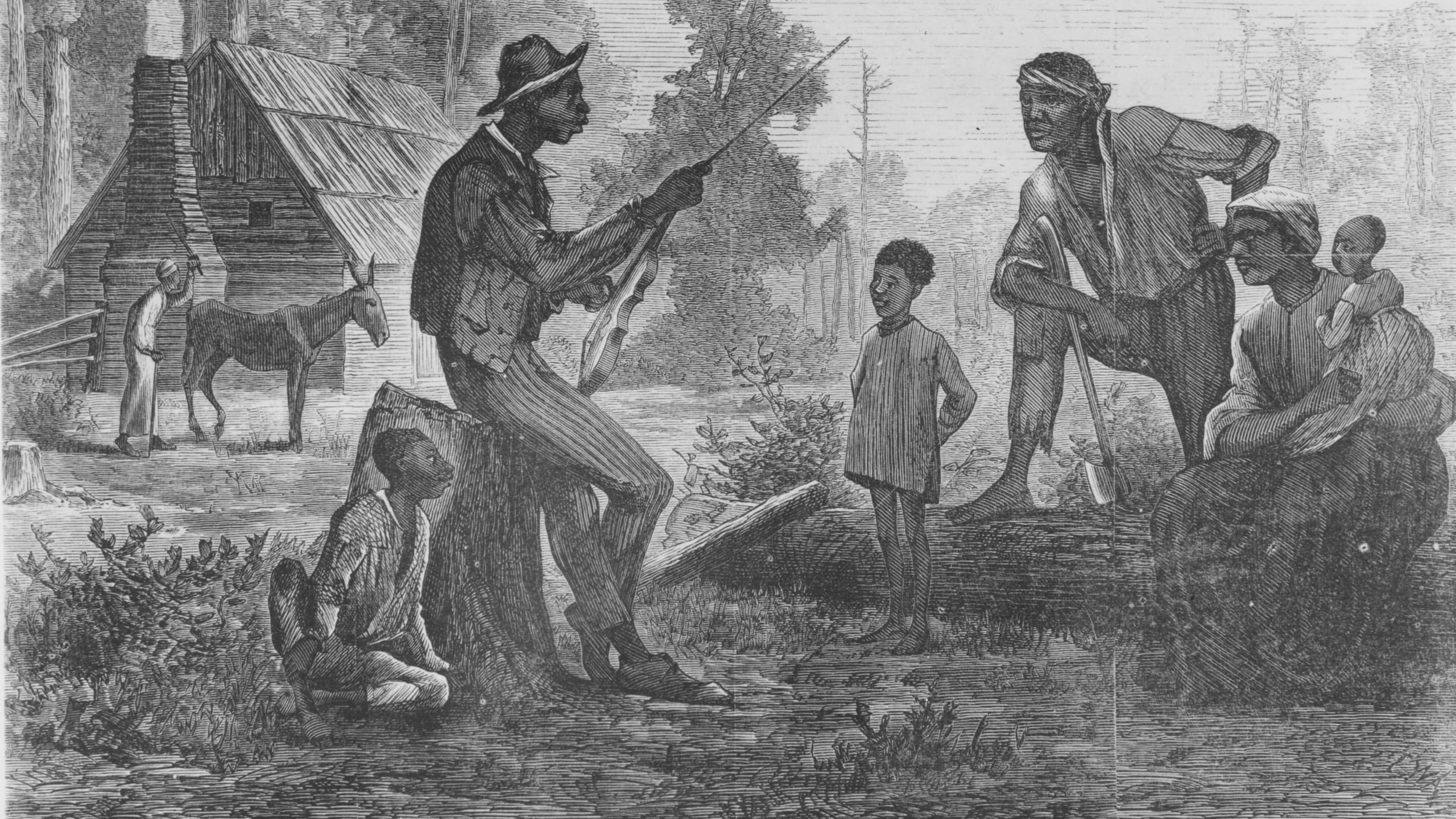
Turning from the Caribbean to the North American continent, the antebellum American South provides further evidence of Jewish involvement in slavery and further evidence against any monolithic characterization of that involvement, whether as uniquely benevolent or uniquely cruel. Jewish Southerners participated in the institution across its full range: as traders in human beings, as plantation owners of varying scales, and as slaveholders whose treatment of the enslaved ran from genuine affection to outright brutality.
Jewish participation in the commerce of slavery took overlapping forms: those who bought and sold enslaved people incidentally in connection with their own needs; merchants who traded in slaves alongside other goods; and professional slave traders whose entire livelihood derived from the traffic. Spread across the urban South, numerous Jewish auctioneers and commission merchants traded in enslaved people as they would any other commodity. D. Mayer, Jacobs & Co. in Atlanta; Jacob Cohen and H. H. DeLeon in Charleston; J. and L. T. Levin in Columbia, South Carolina; and Benjamin Davis, David Judah, and Ash Levy in Richmond, Virginia. Among the merchant class, some dealt in enslaved people alongside groceries, dry goods, hardware, and livestock. Jacob Barrett of Columbia, South Carolina, later of Charleston, was a characteristic storekeeper who, was sent to him from Charleston, promptly disposed of them at very large profits.
Read more Abdul El-Sayed: You’re No Jack Kennedy
Yet the scale of Jewish involvement as professional traders must be kept in proportion. In Richmond, ; in Charleston, 4 of 44. All of the Jewish slave traders in all Southern cities combined probably did not buy and sell as many enslaved people as did the single firm of Franklin and Armfield, the largest slave traders in the South. Those Jewish dealers who did participate were nonetheless unapologetic. Abraham Mendes Seixas of Charleston openly advertised his enslaved men and women for planting, domestic service, and general labor in the Charleston South Carolina State Gazette in September 1784. Slave-dealing did not disqualify Jews from the friendship and esteem of their fellow Jews any more than it did for Christians; engaging in the commerce of enslaved human beings was simply not regarded as incompatible with being a respectable member of the Jewish community.
Beyond the counting houses and auction blocks, a smaller number of Southern Jews achieved planter status. While most occupied the lower rungs of the economic ladder as peddlers and shopkeepers, sociological and historical circumstances, including the European prohibition on Jewish land ownership and the poverty that accompanied most Jewish immigrants to America, meant that the typical Southern Jew had little opportunity or inclination to aspire to plantation life.
Those who did rise to planter status were notable figures. Among the best known was Judah P. Benjamin, who in 1844 purchased an extensive plantation 20 miles below the city in partnership with Theodore Packwood. Benjamin rebuilt the estate of Bellechasse into a magnificent home and staffed it with 140 slaves, of whom approximately 80 were field hands. Another prominent Jewish planter was Major Raphael J. Moses, who owned land at Esquiline Hill near Columbus, Georgia. Moses recorded in his memoirs that when the Civil War broke out he held 47 slaves, and when it ended he had 47 freedmen, all of whom left him except for one old man who remained until he died.
Census data from 1790 lend further weight to this picture. In South Carolina, ; of these, at least 34 owned one or more slaves, totaling 151 in all. These figures confirm that Jewish slaveholding in the antebellum South, while far from dominant within the broader slaveholding class, was a material reality across the region.
Within this slaveholding world, the documentary record reveals the full range of human behavior that one might expect in any slaveholding community: cruelty, paternalism, genuine affection, exploitation, and the quotidian violence of a system that denied human beings their liberty regardless of the character of any individual master. Some Jewish slave owners operated within the paternalistic idiom common to Southern slaveholding culture, emphasizing duties of care alongside claims of ownership.
Among the more striking examples of what was regarded as benevolent ownership is that of Samuel Jones of Charleston. In his will, proved on January 20, 1809, Jones instructed his executors to emancipate his slave Jenny and her son Emanuel, if he had not already done so in his lifetime. He bequeathed to Jenny his bed, bedstead, blankets, tables, pots, plates, chairs, and looking glass, and stipulated that it was his desire that Jenny and her children not be driven from his house in King Street until they had time to find a place of their own. Similar provisions appear in other wills: Philip Hart of Charleston to his slave Flora in 1796, and Jacob Cohen of Charleston emancipated his slave Tom in his will proved in 1800.
Comparable gestures appeared in the Caribbean as well. The Gabay planters in Jamaica , as when David Gabay manumitted a woman named Mary and provided her with a token payment of five Jamaican pounds. Such acts of manumission, while genuine in their individual effect, existed within and did nothing to overturn a system of comprehensive human bondage. That bonds of attachment sometimes endured beyond the institution itself is evidenced by Emma Mordecai, who received a letter in 1867 from a former slave, Sarah P. Norris, assuring her former mistress that she and her husband were tending the family graves in Richmond and that she had loved her people then and loved them still.
The language of kindness, however, could not obscure the fundamental violence embedded in the slave system, and Jews participated in every aspect of it. The most extreme recorded case was the murder of a slave by Joseph Cohen of Lynchburg, Virginia, in 1819, a crime for which he was indicted, tried, and convicted, though was far less severe than that imposed for any trivial misdemeanor committed by a black person.
Beyond individual acts of violence, Jews in Southern towns participated in the legal machinery of punishment as well. In 1798, a mulatto slave named Polly was tried for taking a loaf of white sugar worth $2 from the home of Benjamin Solomon and was sentenced to five lashes on her bare back and ordered to be branded on her left hand. Jews also served in public roles that placed them directly within the apparatus of slave control; in 1792, Mordecai Sheftall of Georgia issued warrants for the arrest of runaway slaves in his district, while in Charleston, Jews served in the same period as turnkey of the jail, constable, and city deputy sheriff.
In the majority of wills examined, moreover, slaves were treated as property to be passed on or disposed of rather than as people deserving of particular care. In 19 of 33 wills studied, enslaved people were simply bequeathed to relatives or friends with no specific provisions, and in five cases executors were instructed to sell them. The executor of Emanuel Stern’s estate sold his 12-year-old slave Mathilda at auction in New Orleans in 1828 for $400, a profitable transaction, as the inventory had valued her at only $250.
What occasionally distinguished Jewish slave ownership, to the extent that it was distinctive at all, was the tension between slaveholding practice and Jewish religious tradition. Some Jewish owners pointed to biblical injunctions regarding the treatment of slaves as a warrant for relatively humane treatment; others adapted religious law pragmatically to the realities of colonial slave ownership, as when that a slave should be manumitted before circumcision, making conversion conditional on freedom, a ruling that balanced religious principle with the economic imperatives of a slave-owning community. The invocation of Jewish law could cut in either direction: toward relatively humane treatment of enslaved people, or toward a legalistic framework that ultimately accommodated their continued enslavement.
Surveying the full scope of this history, from medieval Europe to colonial Brazil and the Caribbean to the antebellum American South, the avalanche of new scholarship on slavery’s universality demands that all participants be examined with the same analytical seriousness, regardless of the political sensitivities involved. Jews were participants in slavery, as traders, financiers, and owners, across all these contexts. They did not monopolize the trade in any period; the early medieval “monopoly” was a nineteenth-century historiographical fiction that hardened through repetition and served the ideological needs of both Christian supersessionists and, paradoxically, certain strands of Jewish historical writing. In the Atlantic world, Jewish involvement was real, documented, and, in the case of families like the Gabays, substantial, yet it remained a minor fraction of a trade overwhelmingly dominated by non-Jewish European powers and their colonial institutions. In the American South, Jews as traders and planters participated across the full spectrum of the institution, yet none of the major professional slave-trading firms were Jewish, and their collective share of the trade was small.
To acknowledge this history is not to endorse the antisemitic libels that have sought to exploit it. It is, rather, to insist on the kind of honest, contextualized historical reckoning that the new scholarship on slavery demands of every community. The goal, as the best of this scholarship demonstrates, is neither to exculpate nor to scapegoat, but to understand how an institution so fundamental to the making of the modern world drew in, compromised, and corrupted people of every background, Jews included.
Read more Meta Slapped With $25 Billion Penalty in New Mexico Data Privacy Case