








There is a certain seductive logic to watching your rival gain advantage through state support and concluding that you should respond in kind. Across the American political spectrum, from think tanks like the Information Technology and Innovation Foundation to conservatives who once treated “picking winners” as a term of derision, industrial policy has staged a remarkable comeback. The pitch is straightforward enough: if Beijing is subsidizing its way to dominance in semiconductors, electric vehicles, and advanced manufacturing, surely Washington cannot afford to stand on free-market principles while the factories disappear. It is a compelling story, and it is also, on closer inspection, largely a myth.
Read more Movie Review: ‘Obsession’
For all the alarm generated by China’s industrial ambitions, the evidentiary base for the enthusiasm is surprisingly thin. Rigorous of whether Chinese industrial policy has actually worked remain scarce, a striking gap given the scale of resources involved. When researchers have finally attempted to take the full measure of it, what they find is not a juggernaut of state-directed efficiency but rather an expensive disappointment.
The sheer scale of the Chinese industrial policy apparatus is not in dispute. Spanning cash subsidies, tax breaks, subsidized credit, and below-market land for favored sectors, it carries an estimated fiscal cost of around 4.4 percent of GDP as of 2023, with the dominant instrument being cash subsidies at 2.0 percent of GDP, followed by tax benefits at 1.5 percent, land subsidies at 0.5 percent, and subsidized credit at 0.4 percent. For comparison, EU state aid across the same instruments ran to roughly of GDP in 2022, with large manufacturing economies sitting slightly above that average. China, in other words, is not merely doing what Europe does with greater enthusiasm; it is doing it at roughly three times the intensity.
The question that follows naturally is what three times the intensity actually buys. According to research, factor misallocation from these policies reduces domestic aggregate total factor by about 1.2 percent relative to a no-industrial-policy baseline, with the knock-on effect of dragging GDP down by up to 2 percent. The policies engineered to supercharge the Chinese economy are, quietly and persistently, undermining it from within. One might at least hope to find some compensating dividend at the firm level, some evidence that the chosen champions became genuinely more productive as a result of state backing. There is none. No statistically significant relationship exists between industrial policy intensity and average firm-level total factor productivity within the same sector, under any specification tested. The innovation prize that industrial policy advocates most reliably promise simply does not appear in the data.
To understand why these outcomes emerge, it is worth examining the precise mechanism by which industrial policy distorts resource allocation, because it cuts against the intuitions of many of the policy’s most enthusiastic admirers. The analysis relies on a structural model built around total factor productivity in revenues, essentially a measure of how efficiently firms deploy their inputs relative to the returns they generate. In a functioning market, factors of production flow toward their most productive uses, and the gaps between firms narrow over time as competition does its work. Industrial policy disrupts this process in two distinct and opposing directions simultaneously, which is precisely what makes it so difficult to correct once entrenched. On one side, subsidies are associated with excess production beyond what a no-distortions benchmark would produce; on the other, trade and regulatory barriers restrict output, likely by increasing the market power of incumbents who can then limit supply, charge higher prices, and capture rents at the expense of consumers and downstream industries. The result is not a coherent industrial strategy so much as an economic tug of war, with different policy instruments pulling the economy in opposite directions rather than toward any coherent optimum.
The damage, moreover, does not remain neatly contained between sectors. Within individual industries, the dispersion of productivity outcomes across firms is measurably wider in sectors subject to industrial policy than in those without it, with a statistically significant 14 percent higher within-sector productivity dispersion in affected . Taken together, industrial policy accounts for around 24 percent of between-sector productivity dispersion and around 4 percent of within-sector misallocation. The between-sector figure is the more sobering of the two, because it is precisely where industrial policy is most deliberately active, redirecting capital and labor across the economy toward government-favored industries rather than those generating the highest returns.
Nothing in the pro-industrial policy narrative carries more rhetorical force than the spectacle of the national champion, the dominant domestic firm in a strategic sector that appears to vindicate the entire model of state-directed capitalism. The research, however, has considerably less flattering things to say about these celebrated enterprises. Leading firms do tend to exhibit higher productivity than the average firm in their sector, though this is more or less what one would expect even without any government involvement whatsoever. Far more revealing is that these same leaders typically exhibit lower revenue total factor productivity than the sector average, implying they are producing at inefficiently high levels relative to the returns they generate, and this pattern is particularly pronounced among state-owned leaders. Their scale reflects not merely competitive excellence but the accumulated distorting effects of subsidies, credit guarantees, and preferential resource access, an artificial inflation of size well beyond what genuine productivity alone would justify.
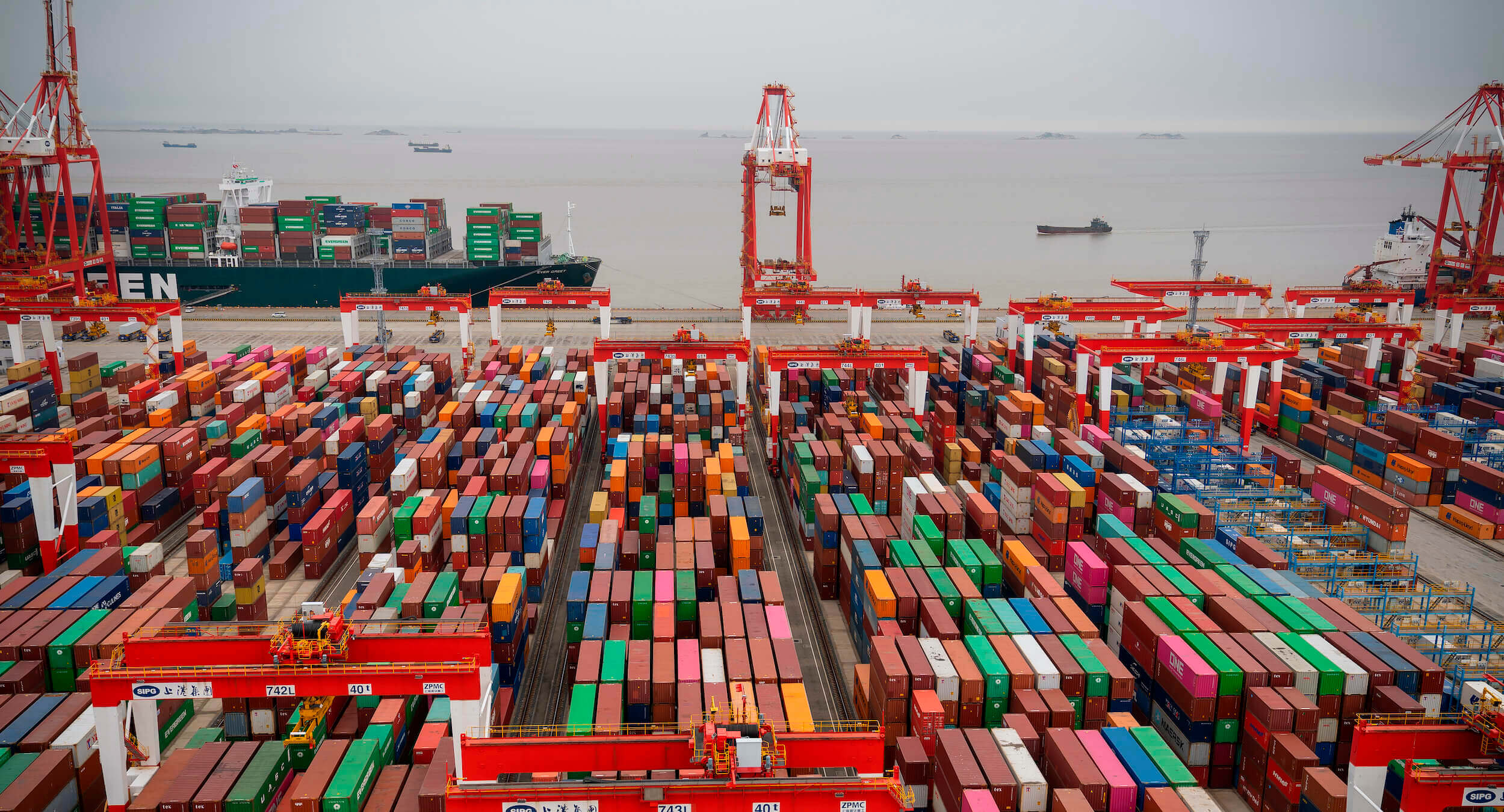
For a ground-level illustration of how this plays out in practice, China’s shipbuilding sector offers what is perhaps the most vivid and instructive case study available, combining extraordinary fiscal commitment with outcomes that fall conspicuously short of the ambition. Between 2006 and 2013, the Chinese government channeled the of RMB 624 billion, roughly $91 billion, into the sector through entry subsidies, production subsidies, and investment subsidies, with entry subsidies alone accounting for RMB 431 billion of the total, dwarfing the RMB 156 billion directed at production and the RMB 37 billion at investment. These were not marginal interventions nudging an industry in a preferred direction; they were transformative injections of public money that reshaped a global industry, and the question is whether the returns justified the cost.
The evidence suggests they did not. When the lifetime profit gains of domestic firms are measured against the total subsidies disbursed, the gross return rate stands at just percent. For every yuan spent supporting the sector, domestic producers gained fewer than twenty fen in net profit, a result substantially depressed by the fixed costs that shipyards must bear regardless of whether any vessels are actually being built. Those fixed costs were calibrated at RMB 15 million per quarter per firm, equivalent to approximately 12 percent of average profit, and even in a hypothetical scenario where fixed costs were zero, the rate of return would have risen only to 25 percent, still far below what the scale of public expenditure might reasonably have been expected to generate.
Part of the explanation for this dismal outcome lies in the entry frenzy that the subsidy structure encouraged. When below-market land prices, simplified licensing, and heavily subsidized entry costs make it cheap to open a shipyard, firms flood in, and during the boom years China was registering more than thirty new shipyards per year, a figure that dwarfs the modest one or two annual entrants typical of Japan and South Korea over the same period. By 2009, the total number of active Chinese shipyards had swelled to a level the market could not sustain, and when ship prices collapsed in the wake of the global financial crisis, many of these yards found themselves without orders and without any realistic prospect of survival. The number of active subsequently fell by almost 50 percent from its 2009 peak to 2020, a painful contraction that might have been avoided had the initial wave of entry been managed with greater care.
The overcrowding produced structural idleness that was not incidental but baked into the very logic of the subsidies themselves. Because entry incentives had attracted predominantly small, high-cost firms lacking the capital stock and order backlog necessary to compete efficiently, the industry became deeply fragmented, with China’s domestic Herfindahl-Hirschman Index from around 1,200 in 2004 to below 500 in 2013. Output was spread thinly across hundreds of marginal producers rather than concentrated in a smaller number of capable yards, and the ratio of production to capital, a proxy for capacity utilization, would have been 19 percent higher during the 2009 to 2013 recession had the subsidies never been introduced. The policy had not built a lean and competitive industry; it had built a bloated and uniquely fragile one.
The timing of the intervention compounded matters considerably. The government distributed approximately percent of total subsidies during the 2006 to 2008 boom, precisely when the industry was already operating close to full capacity and when the costs of further expansion were at their most convex. Counterfactual simulations make the scale of this miscalculation vivid: subsidizing production and investment during the boom generated a net return of only 38 percent, whereas the same budget deployed during the subsequent downturn would have produced a return of 70 . Underutilized capacity lying dormant during a recession is far cheaper to mobilize than overextended resources in a boom, and the firm composition during a downturn, dominated by lower-cost survivors, is more efficient to begin with. China did precisely the opposite of what the evidence suggests would have worked best.
Read more A Conservative Audit of the Left’s Ruling Assumptions
Even the consolidation policies introduced after the financial crisis fell short of their potential. The government’s 2013 “Whitelist,” which directed subsidies toward firms deemed to meet industry standards, was in principle a sound response to the fragmentation problem. In practice, however, the selection process was distorted by considerations beyond pure efficiency, with 65 percent of firms chosen for the Whitelist being state-owned enterprises, compared to 55 percent in an optimally constructed list of the most profitable firms. Of the 56 government-selected firms, only 31 would have appeared on a genuinely efficiency-maximizing shortlist, suggesting that information asymmetries and the influence of vested interests steered support toward politically connected yards rather than the most capable ones, undermining the very purpose of a performance-based selection mechanism.
Shipbuilding is not an isolated failure but rather part of a broader and consistent pattern visible across China’s technology-oriented industrial initiatives, and nowhere is this pattern more clearly documented than in the Strategic Emerging Industries programme. Launched in 2010 and running through 2018, the SEI was one of the most ambitious techno-industrial experiments in modern economic history, targeting frontier sectors from biotechnology to next-generation information technology and channeling fiscal subsidies, talent incentives, and low-interest loans across 123 cities and more than 4,000 city-industry pairs. The headline results are genuinely impressive on their face: patent counts in targeted sectors surged by 184 percent compared to non-targeted units. The difficulty arises when one looks more carefully at what kind of patents were actually being produced.
Despite the dramatic rise in patent volumes, scale-adjusted quality metrics remained effectively flat across every meaningful dimension. Average citations per patent increased by a statistically negligible 0.13 percent, the share of internationally filed PCT patents showed no meaningful improvement, and the proportion of patents remaining active beyond three years actually declined slightly. In other words, the SEI did not produce better inventions; it produced more of roughly the same ones, and the distinction matters enormously for any serious assessment of whether the policy advanced China’s technological capabilities.
The underlying logic is not difficult to reconstruct. Rigid output targets reward numerical production rather than technological impact, and when subsidies flow to sectors based on patent counts and when political promotion tournaments favor officials who can demonstrate measurable results, researchers and firms respond entirely rationally by generating patents that satisfy the metric without necessarily advancing the frontier. The result is expansion without transformation, a system so finely tuned for volume that it inadvertently immunizes itself against the quality upgrading it was ostensibly designed to produce.
The picture darkens further when one looks beyond the targeted sectors to the rest of the economy. The SEI’s gains in favored industries came partly at the expense of those left outside the policy’s perimeter, with untreated sectors in SEI-implementing cities experiencing an average 14.1 percent decline in patent output relative to comparable sectors in cities not yet implementing the policy. Cities such as Beijing and Hefei explicitly redirected funding away from traditional industries toward SEI priorities, creating an environment in which the advancement of strategic sectors drained the innovative capacity of legacy ones. This sectoral displacement is not an unfortunate side effect of an otherwise sound policy; it is a structural consequence of fiscally constrained governments allocating finite resources toward chosen winners.
One might reasonably suppose that the damage could be contained through smarter targeting, focusing subsidies on sectors where cities already hold genuine comparative innovation advantages. Cities that aligned their SEI selections with pre-existing innovation strengths did indeed achieve patent growth rates more than double those of cities that did not, which sounds encouraging until one notices that even this apparently superior approach produced the same stagnant quality pattern. Scale-adjusted citation rates, PCT filing shares, and durable patent proportions remained flat regardless of whether the city had strong prior capabilities in the targeted sector. Path-dependent targeting efficiently replicates what already exists, but it cannot conjure the frontier breakthroughs that genuine innovation leadership requires, and the SEI’s record across citations, patent lifespan, international filings, and collaboration composition, surviving multiple robustness checks including placebo tests, alternative estimators, and balanced panel restrictions, makes this conclusion difficult to escape.
These policy-level failures are compounded by deeper structural weaknesses within the Chinese economy that rarely feature prominently in the Washington conversations about what America might learn from the Chinese model. China’s technological capabilities, while impressive in certain areas, remain predominantly at an intermediate level, sitting between 4 and 7 on a scale of 1 to 10 in applied technology and falling well short of the higher-order innovations that define genuinely advanced economies, with a significant and persistent reliance on foreign core technologies and key components meaning that China’s overall technological system, for all its visible strengths, is neither comprehensive nor self-sufficient.
Compounding this is a persistent mischaracterization of Chinese manufacturing that tends to inflate perceptions of its sophistication. What is celebrated worldwide as “Made in China” is, in practical reality, more accurately described as “Assembled in China,” a distinction with significant implications. Unlike the manufacturing labels of developed nations before the 1980s, which signified the production of genuine finished goods, China’s role in today’s globalized supply chains places it predominantly at the lower to middle ends of the industrial chain, processing and assembling components whose core technologies originate elsewhere.
Perhaps the most structurally damaging weakness, however, lies in the insularity of Chinese corporate culture. American companies, since the 1980s, have built long and open supply chains, retaining only the highest-value functions in-house while outsourcing everything else globally, whereas Chinese firms, whether state-owned or private, tend to produce all components internally. This insular model stifles competition between component producers, weakens the incentive for incremental innovation, and makes internationalization extremely difficult, since a company selling a fully self-contained product can be shut out of a foreign market by a single trade barrier, while a company embedded in global supply chains retains multiple points of international presence and leverage. The consequence is that Chinese companies, though large in aggregate, lack the global standard-setting influence that genuine openness would provide, and reforming this corporate structure by encouraging state-owned enterprises, large private firms, and small-to-medium enterprises to open up to one another is essential if China is to build the longer supply chains needed to compete credibly at the frontier.
The Chinese experience represents the largest and longest-running industrial policy experiment in the modern era, prosecuted with vast administrative resources and an authoritarian government’s unrivaled capacity to direct capital, and what decades of effort at this scale actually reveal are costs that are real, measurable, and significant. The misallocation it generates is not a rounding error on an otherwise successful ledger but a structural drag on the very economy the policies were designed to strengthen. Before Washington rushes to build an industrial policy apparatus modeled on China’s example, it ought to reckon honestly with what that example actually demonstrates, because the mirage of the Chinese model is visible and compelling from a distance, and it dissolves consistently on close inspection.
* * *
Lipton Matthews is a researcher and podcaster. His work has been featured in Mises, The Federalist, Chronicles, American Thinker, Epoch Times, and other publications. He is also author of Busting African Delusions: Institutions, Human Capital, and the Path to Progress.
Read more DHS Announces Trump Administration Has Located 146,000 Migrant Children Lost Under Biden