










The United States is, by most definitions—or at least in its original conception—a great country. It was an audacious undertaking: a nation of equals, equal before the law, with leaders chosen from among those equals based upon merit rather than bloodline. The only real allusion to divine right is the belief that each of us possesses equal worth in the eyes of our Creator. Moreover, it is our standing as children of that Creator that gives rise to the claim that we possess natural rights, which must be recognized by any legitimate government.
Read more The Skilled Immigrant Question: Cognitive Capital and Ethnic Networks

The Constitution allows the states to govern themselves and pass laws without interference from the federal government, except where those laws infringe upon rights reserved to the people. And by “the people,” Jefferson and the Founders did not mean some vague collective. They meant individuals.
No republican democracy had ever been attempted on this scale before. The Greeks experimented with democracy, and the Florentines with republican government, but both quickly encountered the same problem that has haunted every political system ever devised: human nature.
The Athenians, according to Plato, eventually became a mob. Citizens were exiled to settle grudges. Rivals were condemned to satisfy political passions. The mob became easily manipulated to carry out incredibly stupid ventures on behalf of the people, most notably the war with Sparta that brought Athens to ruin.

Florence was little different. The Florentine Republic was a republic, but often one more in name than in practice. Behind the elaborate machinery of government stood the Medici family, quietly ensuring that the right people remained in power. When the Medici were challenged by Savonarola, the result was not some glorious triumph of democratic virtue. It ended, as these things often do, with bloodshed, revenge, and execution.
The Roman Republic was even more ambitious, yet it too collapsed into tyranny. Rule of law based upon equality is difficult to sustain because, quite frankly, people do not like being equal. Some people wish to rule. Others wish to be close to those who do. Even rulers who sincerely believe in justice often develop a curious tendency to exempt themselves from the rules they impose on everyone else. And this is where all roads seem to lead.
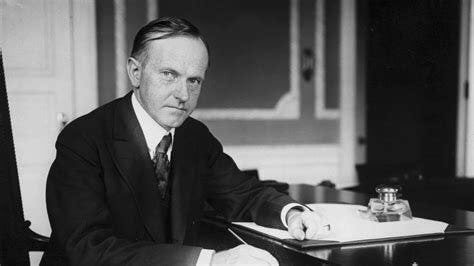
If the business of America is business, as Calvin Coolidge observed, then it is only fitting that we have rules to govern it. We created boards of directors, chief executive officers, compliance officers, risk officers, auditors, regulators, and examinations. We built a vast system of checks and balances designed to protect investors, depositors, clients, and shareholders.
On paper, it is magnificent. In practice, it resembles the court of Henry VIII.
The problem is not that regulations are poorly intended. The problem is that regulations are ultimately administered by human beings. Human beings have spent thousands of years finding ways around rules they do not wish to follow. They are not going to be deterred by naive regulations promulgated by those who barely know the ropes of the business they are trying to regulate.
Let’s unpack this a little. The CEO does not necessarily want the board to know everything. The board does not wish to hear unpleasant truths. The General Counsel aims to please management. The regulator may be thinking about his next job. The independent director may be slightly less independent than advertised. Before long, the entire structure begins to function less like a republic and more like a royal court.
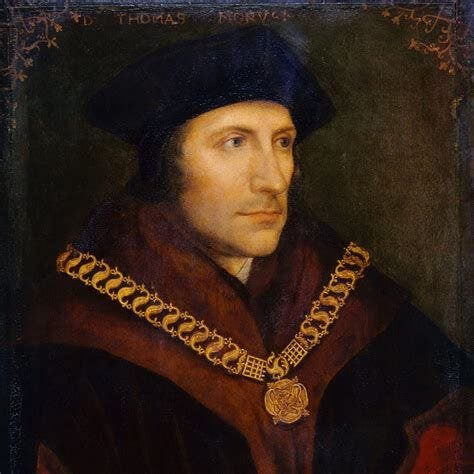
Anyone who refuses to play along soon discovers the fate of Thomas More. Independence sounds wonderful in a policy manual. It is far less enjoyable when your mortgage depends upon it.
There is another problem. The most lucrative promotion many regulators can hope for is eventually to work for one of the institutions they once examined. This creates a revolving door that would make a Richard J. Daley blush. It produces professionals who know exactly how to avoid regulatory scrutiny while simultaneously creating incentives for regulators to avoid making enemies of future employers.

Law firms play an important role in maintaining this three-ring circus. Lawyers are frequently asked to find workarounds, exceptions, loopholes, and alternative interpretations. For years, corporations sought to tame compliance officers by placing them under Legal. This was described as providing “guidance.” In practice, it put the compliance officer into a vice, and the general counsel served as someone who threatened compliance if they didn’t look the other way as management attended to its usual shenanigans.
Then Washington made matters worse. Starting in 2004, regulators imposed personal responsibility upon chief compliance officers, requiring certifications that policies and procedures were designed to prevent and detect violations of law. The result was remarkable. The one person with the least authority to force change became the person most likely to bear responsibility when things went wrong. It was a breathtaking display of naivete on the part of the lawmakers.
Wait, you say. Doesn’t the compliance officer have access to the board? Another interesting theory.
But that counts for nothing. Boards are often populated by individuals selected with substantial input from management. Directors may be independent under a regulatory definition yet still rely heavily upon management for information and are grateful for having been placed on the board in the first place. We know where their loyalty lies. They are far less likely to show deference to an upstart compliance officer who challenges where they draw their checks from. And so, unpleasant revelations have an astonishing tendency to find their way back to the very people being discussed.
Read more Principles for a Centrist Realignment: The Grand Alliance

The next option is resignation and whistleblowing. This sounds noble in theory but ridiculous in practice. Compliance professionals have families, mortgages, or careers to think about. The SEC has made whistleblowing somewhat more practical through financial awards. Banking regulators have not. The notion that a whistleblower will effortlessly find another executive position afterward is about as realistic as a homeless man with untreated syphilis landing a date with Sydney Sweeney.
The result is a system designed to localize responsibility upon the individual with the least ability to solve the underlying problem. Everyone else in senior management sits comfortably in the grandstand while the compliance officer or risk officer absorbs the body blows. Sometimes the rest of management even joins in. At that point the organization begins to resemble Lord of the Flies, and the compliance officer becomes Piggy.

When companies fail, analysts rarely focus on the possibility that management insulated itself from accountability. Instead, they demand either more regulation or less regulation. Rarely do they ask whether the regulation itself was intelligently designed.
That raises a more fundamental question. What if our entire licensing process is flawed? After 40 years working with investment advisers, banks, and broker-dealers—and prosecuting and defending people from all three—I have reached an uncomfortable conclusion. Only a fraction of them should probably actually be in business. This is not an argument for increased credentialism. This is an argument for competence.
The idea that someone with little understanding of banking can become the president of a bank should concern us. The idea that a lawyer with no meaningful banking experience can become general counsel of a banking institution should concern us. The idea that individuals can manage billions of dollars based upon trendy theories, PowerPoint presentations, or dart-throwing exercises should concern us as well.
Caveat emptor is not an adequate answer when ownership structures are hidden behind layer after layer of corporate entities. Are we granting licenses because applicants possess the skill and judgment necessary to safeguard other people’s money, or are we simply collecting fees and checking boxes? I believe that the events of 2008 answered that question most regrettably.
I am not arguing that all authority should be transferred to bureaucrats. But neither should we allow unaccountable know-nothings access to our financial system, our retirement assets, and ultimately our futures. Regulations must ensure competence, character, and judgment in those entrusted with access to our financial system.
Millions of Americans depend upon capital markets for their retirement security. Whatever one thinks about the future of Social Security, the reality is that Americans increasingly rely upon the markets. Because of this, they should be able to expect regulators to perform their duties competently and independently. An examination is not a job interview. Regulation is not supposed to be political theater.
Sound regulation should resemble good architecture. It should be designed with skill, purpose, efficiency, and safety in mind. Instead, much of our regulatory structure resembles Robinson Crusoe’s hut—patched together over decades without any coherent design philosophy. Regulation requires intelligent design—Louis Sullivan, not tract housing.

Like an architect designing a skyscraper, legislators must understand both the environment and the materials with which they are working. The most important material in any regulatory structure is human nature itself. As an architect takes the natural surroundings into account when designing a building, so our legislators must understand market conditions and human nature before they slap together laws that serve their limited political purpose.
In short, the limits of regulation and the limits of human nature are inseparable. No system can succeed if it assumes that those entrusted with power will voluntarily restrain themselves. Effective regulation begins not with idealism, but with realism. It begins with an understanding that people seek power, protect power, and often abuse power.
The goal is not to create a perfect system. The goal is to create one that disperses authority, demands accountability, and makes it difficult for the ambitions of a few to endanger the interests of many.
Because in the end, institutions do not fail because they lack rules. They fail because the people charged with enforcing those rules discover that power is more profitable than principle. The history of government, finance, and regulation is not a story about insufficient laws. It is a story about human beings finding new ways to ignore them.
The architecture of failure is remarkably consistent. The statutes change. The regulations change. The organizational charts change. But human nature remains stubbornly unimpressed by all of them. If we want our laws to work, we need to start there.