







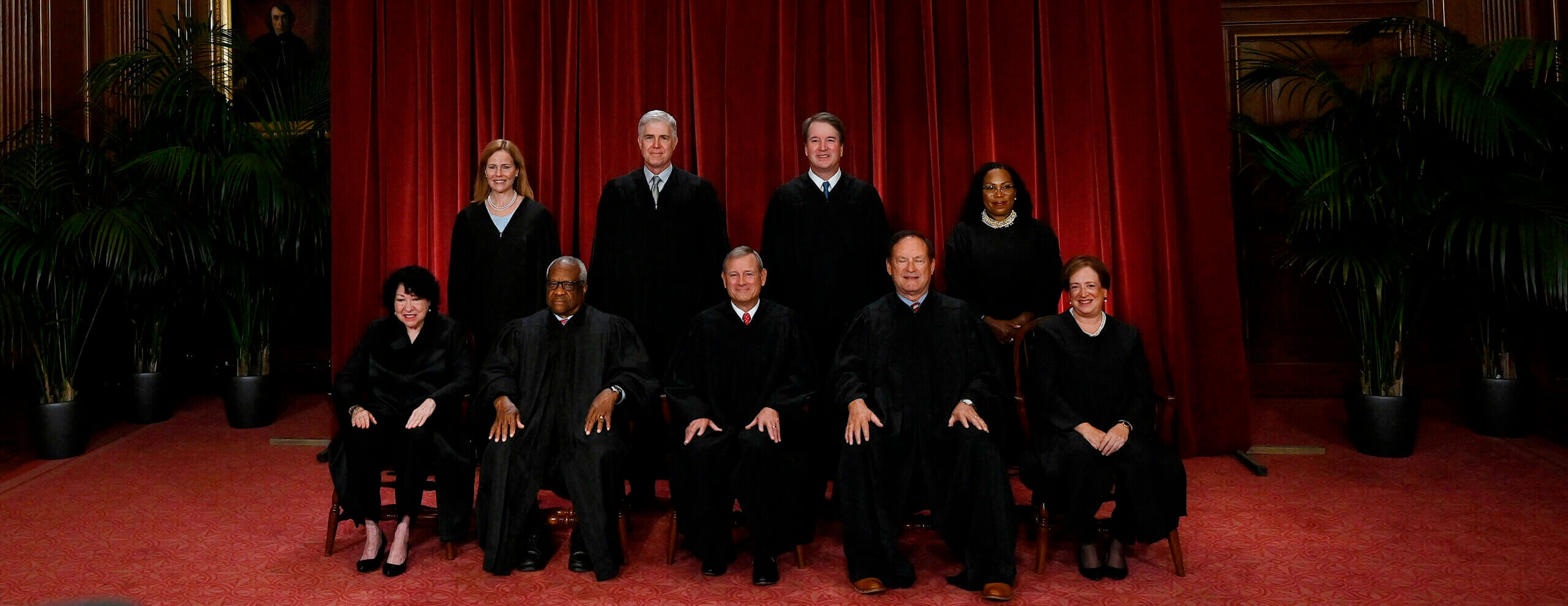
In 6-3 decisions Thursday, the U.S. Supreme Court ruled in favor of the Trump administration on two key immigration cases, allowing the government to end Temporary Protected Status (TPS) for Haitian and Syrian nationals and turn away asylum seekers who have not yet crossed into the United States.
Read more Trump Admin Announces Arrest of More Than 10,000 Suspected Gang Members
In the majority held that the administration’s decision to terminate TPS for 356,000 Haitians and 6,000 Syrians is not subject to judicial review, affirming that 8 U.S.C. § 1254a(b)(5)(A) explicitly bars courts from reviewing the Secretary of Homeland Security’s determinations regarding the designation or termination of TPS.
The majority concluded that the statute’s plain language precludes judicial second-guessing of both the substantive decision and the procedural steps leading to it, effectively overturning lower court injunctions that had blocked the terminations based on alleged procedural failures and claims of racial animus.
The ruling establishes a precedent that likely shields TPS terminations for other designated countries (such as Venezuela, Afghanistan, and Cameroon) from similar legal challenges, affecting over 1 million immigrants nationwide.
The three liberal justices dissented, arguing that the majority’s interpretation ignores “evidence of discriminatory intent” and removes essential checks on executive power.
The Supreme Court also sided 6-3 with the Trump administration in ruling that the government may legally turn away asylum seekers who have not yet physically crossed into the U.S. In an opinion written by Justice Samuel Alito, the Court determined that individuals standing in Mexico do not “arrive in” the U.S. under federal law and therefore are not entitled to apply for asylum or demand inspection by immigration officers.
“The context in which the phrase ‘arrives in the United States’ is used in the immigration statutes at issue here supports an ordinary-meaning reading. So does the presumption against extraterritoriality. We therefore reverse,” Alito wrote.
Read more Sacramento Opens New Homeless Camp With Multimillion-Dollar Price Tag
This decision greenlights the “metering” policy, which allows border agents to block migrants at ports of entry if they lack valid travel documents. The Court’s three liberal justices dissented, with Justice Sonia Sotomayor arguing the ruling creates a “radical contraction” of asylum rights and allows the executive branch to circumvent processing procedures by physically preventing entry.
These decisions follow a separate 6-3 ruling on Tuesday where the Court also sided with the Trump administration regarding green card holders. In that case, the justices ruled that border officials do not need “clear and convincing evidence” of a crime to place lawful permanent residents on immigration parole, effectively strengthening the government’s power to detain or deport green card holders accused of crimes.
The Supreme Court is expected to issue a decision regarding birthright citizenship next week.
At issue is whether the Executive Branch has authority to end birthright citizenship, and according to court observers, Chief Justice John Roberts has been skeptical of the government’s position.
Opponents of Birthright Citizenship say if the Court rejects the administration’s challenge, it may be time for a constitutional amendment.
Read more Satellite Images Show China Built Replica US Destroyer for Missile Testing