







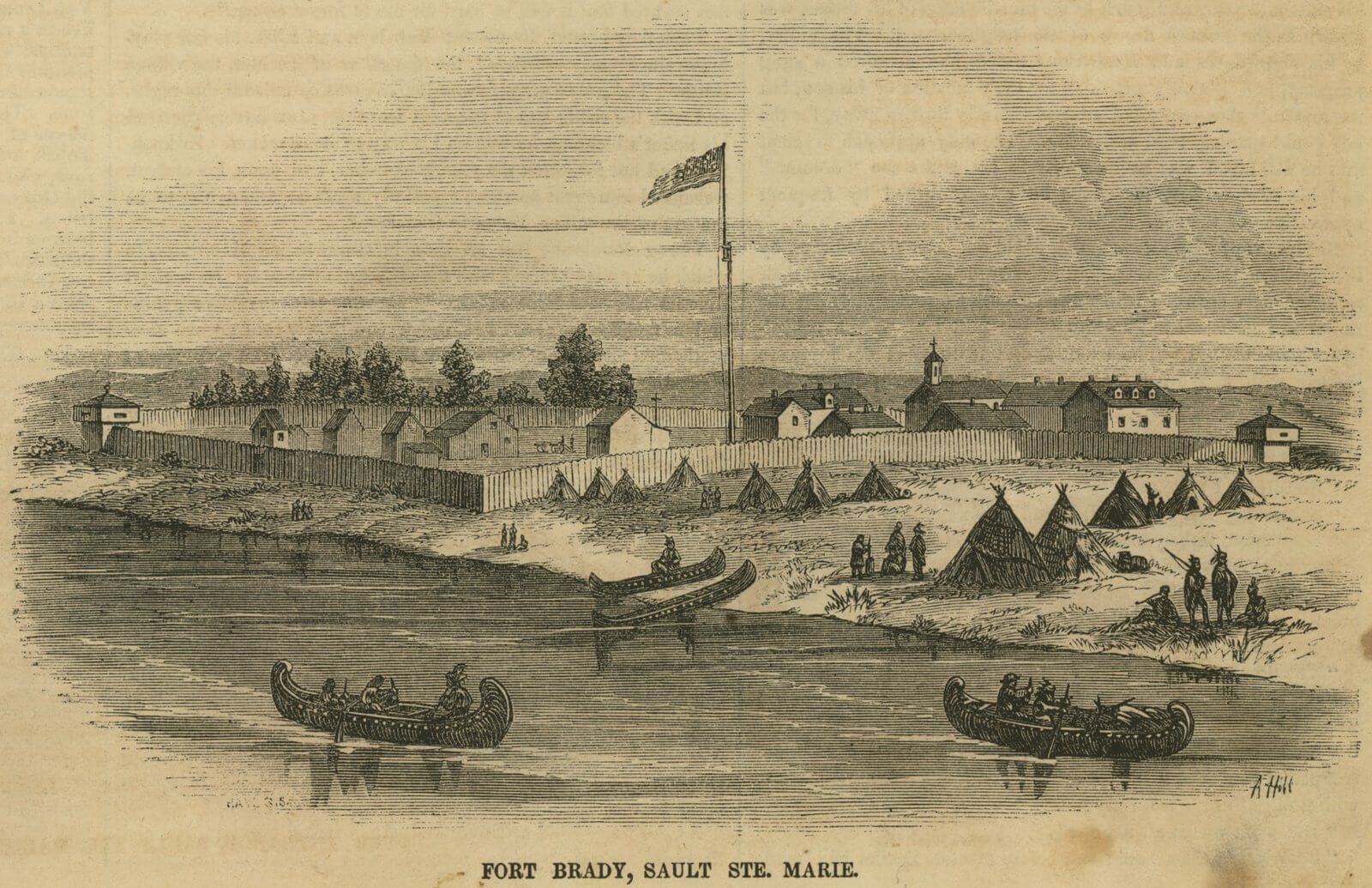
At Fort Brady in northern Michigan, near the St. Marys River, where Lake Superior drains toward Lake Huron, artifacts from America’s past are being reclassified as Native American funerary objects. A joint repatriation inventory by Michigan State University and the U.S. Army Corps of Engineers now lists bottle caps, bolts, doorknobs, glass bottles, a hairbrush, a harmonica, historic ceramics, a light bulb, a bullet, burlap, a musket ball, a pencil, plastic, a pocket watch, a toy gun, and other plainly historic materials as funerary objects, slated for repatriation and pulled from the reach of researchers.
Read more Dear America, Happy 250th. No Hard Feelings!
That should alarm anyone who cares about preserving America’s history. Fort Brady was not simply a Native American site. It was occupied by Native American tribes, then the French Colonial Army, and later the U.S. Army. Established in 1822, Fort Brady remained in operation until 1944, with thousands of soldiers and officers stationed there over more than a century. After the U.S. Army closed the fort, the site became part of the Lake Superior State University campus.
These historic materials are not being reclassified because they belong to an ancient burial rite. They are being swept into repatriation because the Native American Graves Protection and Repatriation Act (NAGPRA) has been expanded far beyond the compromise Congress originally adopted. Last month, the Goldwater Institute published The Reburial of the Southwest, my study into how NAGPRA is erasing our ability to study America’s past in our universities and display America’s prehistory in museums. But the problem is broader than prehistory alone: under today’s expanded use of NAGPRA, historic materials across the country, like those at Fort Brady, are being thrown into a repatriation process that was never supposed to include them.
When Congress passed NAGPRA in 1990, the law was presented as a compromise. Federally recognized tribes would be able to reclaim ancestral skeletal remains, funerary objects, sacred objects, and objects of cultural patrimony when those remains or artifacts could be linked to them by a preponderance of evidence. But the law was not supposed to empty museum collections or hand over every object that might once have been found near Native American remains. Materials that could not be linked to a federally recognized tribe, artifacts that fell outside NAGPRA’s defined categories, and modern replicas were supposed to remain available for research, study, and public display.
That compromise has collapsed. Rather than protect both tribal interests and the public’s ability to understand the past, NAGPRA has increasingly become a tool for restricting scholarship, closing exhibits, and placing historically important materials beyond the reach of researchers and the public. The 2023 regulatory guidance made that problem far worse.
At the end of 2023, new guidance removed the ability for items to be categorized as culturally unidentifiable to a tribe. Museums and universities must now consult with tribes to obtain permission to display and research materials that may or may not be linked to them. Tribal “traditional knowledge” has also been added to the evidence accepted for affiliation determinations. Worse, this evidence cannot be challenged and must be deferred to.
The guidance also expanded the “duty of care,” requiring museums and universities to rely on tribal “traditional knowledge” when handling and caring for human remains and cultural artifacts. That has led to sex-discriminatory actions barring women from handling artifacts and isolating them during menstruation. (Read “World-Renowned Museum Embraces Sexism”).
These regulatory changes have led to the shuttering of museum exhibits across the nation. Many remain closed, including more than 10,000 square feet of exhibits on Native American tribes in the American Museum of Natural History.
Read more A Semiquincentennial Psalm
The same guidance has produced a series of repatriations that strain credulity—fossilized feces logged as funerary objects, unmodified animal bones reclassified as sacred objects, and even a dental cast treated as human remains.
Perhaps most troubling, especially as America approaches the 250th anniversary of the Declaration of Independence, is the repatriation of historic materials through NAGPRA.
The University of Missouri Museum of Anthropology listed plastics, metal buttons, and historic ceramics as funerary objects associated with Native American sites in northeastern Arkansas dating to the Late Mississippian period, AD 900 to AD 1600. Yet these materials came from later European arrivals. Historical records show that in the 1920s, a lumber company and a school operated in the area. The plastics likely came even later, probably during excavation. The University of Missouri is burying the area’s true historic past.
The U.S. Army Corps of Engineers and the South Carolina Institute of Archaeology and Anthropology are treating historic metals and glass as funerary objects at 38BK235, also known as the Swamp Site, in Berkeley County, South Carolina. The site was later colonized by Europeans who grew rice in the swampy region. It is also associated with Revolutionary War General Francis Marion, known as the Swamp Fox, whose tactics helped secure liberty for the Carolinas. Although prehistoric Native American artifacts, likely dating from 1200 BC to AD 1000, have been found at the Swamp Site, historic metals and glass should not be treated as indigenous burial goods.
These examples show how far NAGPRA has drifted from its original purpose. Whatever the motive, the result is the same: non-Native American historic materials are being removed from the public record and treated as if they were indigenous burial goods—all to the detriment of academic research.
That erasure of history must stop.
Unlike other abuses of NAGPRA—the repatriation of modern art and replicas, for instance—Congress did not foresee non-Native American historic materials being swept into repatriation efforts. That abuse can be stopped by challenging the 2023 regulatory guidance and restoring professional judgment to the process. Anthropologists, archaeologists, curators, and historians should be expected to do what their training requires: distinguish Native American funerary objects from later historic materials.
If they do not, NAGPRA will no longer be a law governing the return of ancestral remains and sacred objects. It will become a tool for reburying American history itself.
* * *
This article was originally published at Minding The Campus on June 29, 2026.