








Critics of the policies that have turned California into the most inhospitable place in America to do business or try to make a living tend to focus on outgoing Governor Gavin Newsom. But California is a one-party state. Other entrenched politicians play a powerful supporting role, and Attorney General Rob Bonta is a prime example.
Appointed by Governor Newsom to finish Xavier Becerra’s term as AG, then reelected in November 2022, Bonta has already had five years to reassess the policies that have driven millions of people and thousands of businesses out of California. But instead of recognizing that California’s extreme environmental policies have wreaked havoc on the state’s economy and, in most cases, done more harm than good to the environment, Bonta is doubling down.
In his most indefensible display of supposedly environmentalist activism yet, Bonta has filed a notice of intent to sue the U.S. Department of the Interior over the deal it struck with Golden State Wind LLC to cancel its federal offshore wind lease off California’s Central Coast. In a state where households pay $0.35 per kilowatt-hour for electricity—more than twice the national average—Bonta is using the power of his office to protect what is the most expensive form of taxpayer-subsidized electricity ever devised, wind turbines that float miles offshore in deep water.
There are so many things wrong with the rationale for floating offshore wind, it’s hard to know where to begin. Wind energy in general is problematic, but offshore wind is worse. According to the International Energy Agency, the “mineral intensity” of offshore wind per megawatt of electrical output is 50 percent greater than solar, nearly twice as much as onshore wind, three times that of nuclear, seven times more than coal, and fifteen times more than natural gas. And the IEA analysis was based on offshore wind, where the turbines are on towers embedded in the ocean floor in shallow water. Floating offshore wind is an entirely different animal.
California’s “Offshore Wind Energy Strategic Plan,” updated in June 2024, calls for 25 gigawatts of capacity. Doing that would require 2,083 floating towers, approximately 800 feet (or more) in height from the waterline to the tip of a rotor blade in vertical position. Each of them would have a hub containing a 12-megawatt turbine teetering at least 500 feet above the waterline. Each of these towers would sit atop massive pontoons, straining at tethering cables anchoring them to the sea floor in water 4,000 feet deep, with high-voltage undersea cables connecting them to the mainland 20 miles away.
At a 40 percent yield and 90 percent uptime, an offshore wind farm this big would generate 78,840 gigawatt-hours per year. That’s a lot of electricity. It would equal 28 percent of California’s total electricity consumption of 278,338 gigawatt-hours in 2024. But notwithstanding the environmental havoc this gargantuan mess would make, how much would it cost?
Here are the official projections:
$184 billion to “procure and install 25 gigawatts of floating offshore wind turbines.” (, ref. page 7)
$12 billion to upgrade existing port infrastructure (CEC, ref. page 25)
$36 billion to upgrade transmission infrastructure for “offshore wind integration” (, ref. page 5)
That amounts to a total cost of $232 billion. Assuming current commercial bond market terms that offer a 25-year term at 4 percent interest, the financing payment is $14.9 billion per year.
It’s simple enough to divide the $14.9 billion annual financing cost by 78,840 gigawatt-hours, then divide by one million to express the result in kilowatt-hours. The result is $0.19 per kilowatt-hour. Not including the inevitable overruns. Not including operations and maintenance. Even after adding those costs, it’s still just a wholesale price, to which you must add the cost for storage of the intermittent power, transmission and distribution, and utility overhead.
To illustrate just how incredibly stupid these financial metrics are, consider the cost of what even Bonta would applaud as a safe and renewable alternative, sunlight-sourced electricity from photovoltaic panels. Both require battery or other storage backup, adding cost, but at $1 million per megawatt of capacity, even at a much lower 25 percent yield, under the same terms, the financing cost to install photovoltaic electricity is $0.03 per kilowatt-hour. Three cents. Seven times cheaper than floating offshore wind—and unlike floating offshore wind, a technology already proven at scale. Moreover, solar installations can be decentralized on private land, including on rooftops, greatly reducing the need for transmission grid upgrades.
This is the context in which supporters of offshore wind criticize federal buybacks, and never mind that the buybacks are less money than the developers originally paid to enter into these leases. As a spokesperson for the SLO Climate Coalition recently told a local news source in Central California, “We’re wasting public money to cancel these projects, and that’s a job and economy killer.”
This is an incredible inversion of economic reality. To date, California taxpayers have squandered perhaps tens of millions of dollars on planning for floating offshore wind. If these monstrosities were ever actually built, it would squander hundreds of billions of dollars and constitute a permanent economic drain on California’s businesses and households.
Professional advocates for floating offshore wind can perhaps be forgiven. They’re getting paid. They’re doing their jobs. And like so many others, they’re willing to prioritize the alleged “climate” benefit the whole scheme will deliver and ignore the slightly less apocalyptic but far more certain harm to the environment that these turbines will inflict. As a practical matter, supporters anticipate these wind farms will bring economic growth, just as many people in California’s San Joaquin Valley have supported high-speed rail because they didn’t want to stop those subsidy helicopters from flying overhead, dropping copious bales of hundred-dollar bills down to earth for anyone who says the right things to pick up and spend.
Rob Bonta, on the other hand, ought to know better. He isn’t required to answer to wind developers. His responsibility is to safeguard the interests of 39 million Californians.
If Bonta were sincerely concerned about his fellow Californians, or, for that matter, if he cared about the environment, we wouldn’t be suing the DOE to protect floating offshore wind. Instead, Bonta would be suing the federal, state, and regional agencies that locked down his state’s timber harvesting industry, turning California’s forests into overgrown and unhealthy tinderboxes. He’d sue the California Air Resources Board for preventing more controlled burns not only in conifer forests but also in the chaparral surrounding metropolitan Los Angeles. He’d sue regional agencies that made it impossible to thin brush or graze flammable hillsides. He’d sue on behalf of homeowners to strike down laws that prohibit new home construction on California’s vast stretches of open space. And finally, he’d sue agencies and countersue litigants who try to stop every practical implementation of cost-effective water, energy, and transportation infrastructure, because only with that enabling foundation can the price of housing ever come down.
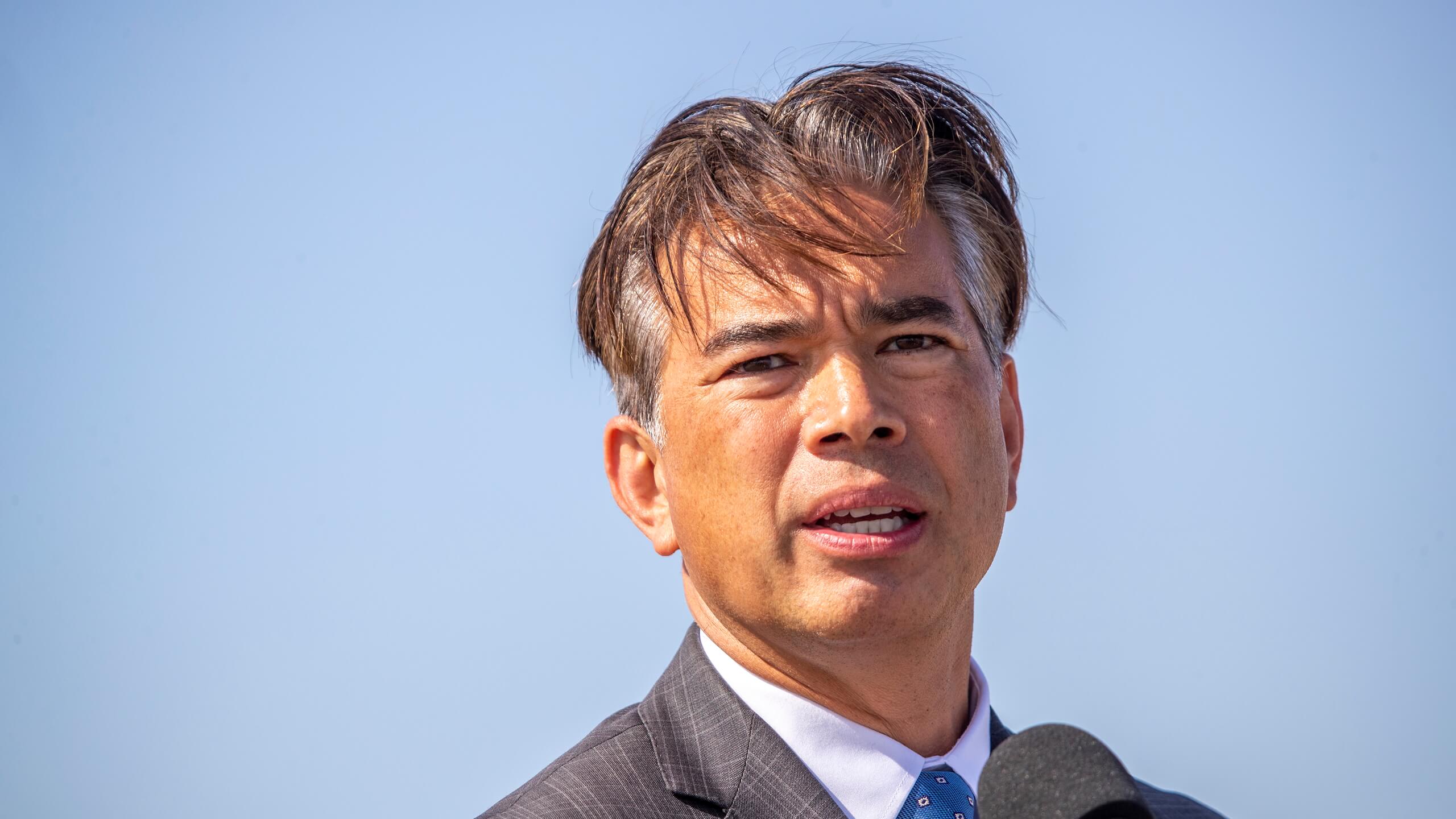
Rob Bonta, to put it charitably, is woefully misguided. But like his boss, Governor Newsom, he has a beautiful, slick pompadour. With hair like that, who cares if homes in Silicon Valley are now selling for more than $2,000 per square foot and the price of gasoline recently peaked at over $8.00 per gallon? Just like his boss, Bonta must believe that his fastidious hair care renders him at his photogenic best as he faces yet another gang of reporters and cameras and panders yet again to California’s millions of gullible green voters.
California is unaffordable, and Bonta is trying to make it even more so. None of California’s ruling politicians, Bonta least of all, are ready to try anything new.
Read more White House Report Finds Smithsonian Leadership Engages In ‘Extreme Political Activism’