

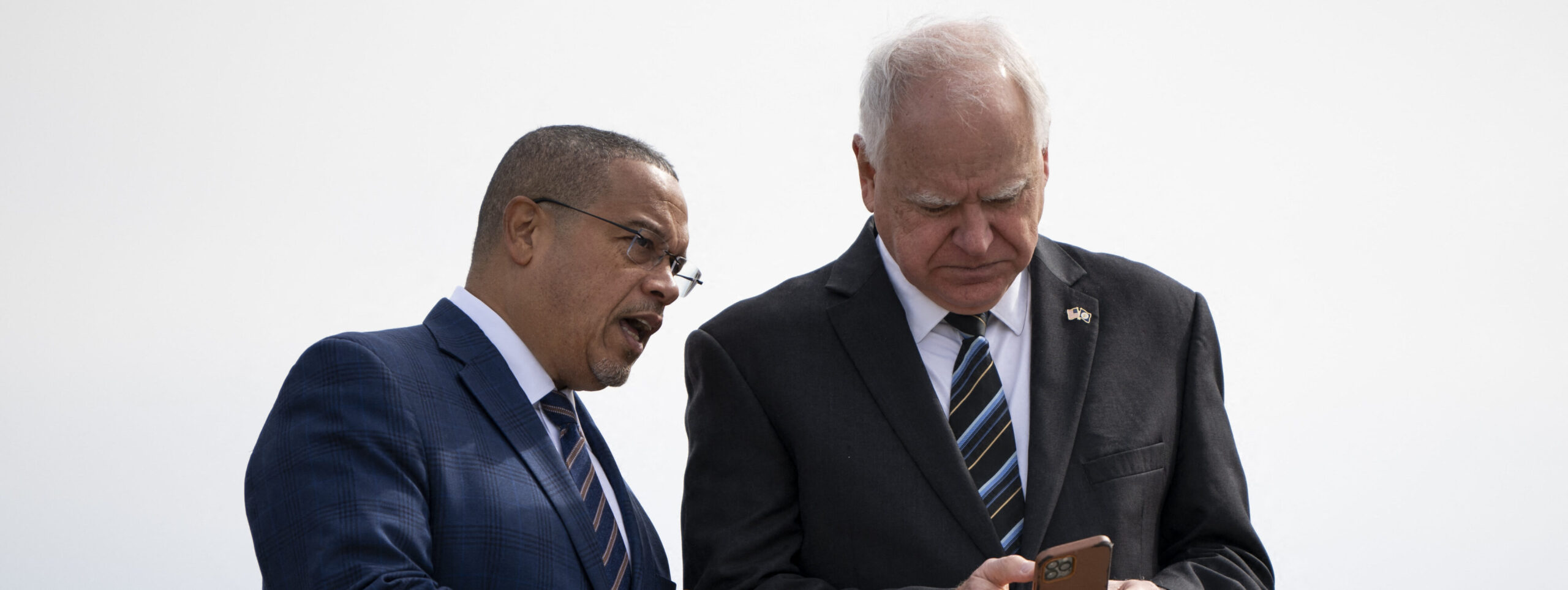
Vice President J.D. Vance has referred top Minnesota Democrats, including Governor Tim Walz and Attorney General Keith Ellison, to the Department of Justice’s new Fraud Division for criminal investigation after the House Oversight and Government Reform Committee released a blistering new report alleging that they were aware of the widespread taxpayer fraud in the state as early as 2019, but repeatedly failed to act.
For the past year, the Oversight Committee has been conducting an investigation into the massive amounts of fraud in Minnesota’s taxpayer-funded social services programs. Governor Walz and Attorney General Ellison testified before the committee in March 2026, where they defended their handling of the fraud crisis and accused Republicans of politicizing the issue.
But according to the Committee’s latest staff titled “The Cost of Doing Nothing: How Tim Walz and Keith Ellison Fueled Minnesota’s Fraud Explosion,” the Democrats knowingly allowed $9 billion in Medicaid funds to be lost to fraud and $300 million in federal child nutrition funds to be placed at serious risk.
The report includes testimony and documents obtained by the Committee showing how the state’s Democrat leaders failed to address fraud concerns and retaliated against state employees who sought to protect taxpayer funds.
Their dereliction allowed “criminal schemes to flourish and diverting critical resources from vulnerable Americans,” the Committee stated in a press release.
“I’ve referred these allegations to DOJ’s new Fraud Division for criminal investigation,” Vance posted on X in response to the report. “Minnesota state officials are not above the law, and if they facilitated fraud, lied under oath about what they knew, or harassed and intimated whistleblowers, they must face justice.”
The Committee’s report refers to at least 30 whistleblowers who said they felt retaliated against.
Minnesota whistleblower Faye Bernstein recently went public, alleging she faced retaliation from state officials after expressing her concerns about weak oversight of contracts and grants.
Bernstein, a 20-year Minnesota state employee told Fox News she was sidelined, ostracized and placed on investigatory leave for sounding the alarm on the rampant fraud she was seeing in the Minnesota Department of Human Services.
“You lived in fear of being called racist and that is life changing,” Bernstein said. “That changes how you walk around in the world and how how you do your work.”
Read more DHS Directs ICE to Deport Illegal Aliens Who Vote in American Elections
She added, “I am not confident speaking up about things anymore. It is very impactful.”
Some key findings from the House Oversight Committee report include:
- Minnesota officials continued directing taxpayer dollars to Feeding our Future and other high-risk entities despite identifying serious program deficiencies, enabling hundreds of millions of dollars in federal funds to flow to fraudsters.
- Testimony and documents show that concerns about litigation and accusations of discrimination—not legal barriers or directives from law enforcement—were cited as reasons for continuing payments to suspected fraudsters.
- The Walz Administration retaliated against state employees who raised concerns about fraud, while senior state officials prioritized managing political and media fallout over addressing known fraud vulnerabilities.
- Failures to prevent fraud resulted in an estimated $300 million in federal child nutrition funds being lost and potentially $9 billion in Medicaid-related funds to be lost or placed at serious risk.
According to the Government Accountability Office (GAO), between $233 billion and $521 billion is lost annually due to fraud.
The Oversight Committee has proposed the following ten bills aimed at protecting taxpayer funds:
– H.R. 8464 (Stopping Fraudulent Payments Act): Shifts focus from “pay and chase” to prevention by blocking payments with elevated fraud risks and empowering the U.S. Treasury to return risky payment requests.
– H.R. 8463 (Pre-Payment Fraud Prevention and Treasury Data Access Act): Strengthens financial controls by requiring pre-payment verification and expanding the use of the Treasury’s Do Not Pay system.
– H.R. 8312 (Fraud Prevention and Accountability Act of 2025): Establishes a permanent Inspector General for Fraud, Accountability, and Recovery (IGFAR) within the U.S. Treasury to maintain government-wide anti-fraud analytics.
– H.R. 8467 (Zeroing Out Monetary Benefits Improperly Expended Act): Replaces annual improper payment estimates with continuous, risk-based controls and mandates comprehensive fraud risk assessments.
– H.R. 6916 (Federal Program Integrity and Fraud Prevention Act of 2025): Prohibits individuals convicted of fraud-related felonies from receiving federal contracts or grants for three years.
– H.R. 428 (Bonuses for Cost-Cutters and Fraud Preventers Act): Doubles the maximum cash award for federal employees reporting wasteful spending or improper payments from $10,000 to $20,000.
– H.R. 1722 (Billion Dollar Boondoggle Act of 2025): Requires agencies to report annually on federally funded projects that are over five years behind schedule or exceed cost estimates by at least $1 billion.
– H.R. 4642 (Fiscal Contingency Preparedness Act): Mandates annual assessments of the government’s fiscal strength in the face of potential domestic or international emergency shocks.
– H.R. 2069 (Stop Secret Spending Act of 2025): Enhances transparency by requiring the reporting of “other transaction agreements” and previously unreported funds on USAspending.gov.
– H.R. 7934 (Settlement Agreement Information Database Act of 2026): Requires federal agencies to publish details of settlement agreements and consent decrees in public electronic databases.
The House of Representatives is slated to voted on these bills this week, according to the Committee’s press release.
“Minnesota Governor Tim Walz and Attorney General Keith Ellison are responsible for one of the most stunning oversight failures this Committee has ever examined,” said Committee Chairman James Comer (R-Ky.) in a statement.
Comer added that the report was a “culmination of months of investigative work and reveals hard evidence showing how the Walz Administration failed to stop widespread fraud, allowing criminals to enrich themselves at the expense of American taxpayers.”
Billions of dollars were stolen because Minnesota state leaders turned a blind eye to rampant fraud and retaliated against state employees who dared to raise concerns. It is now clear the Walz Administration chose to protect the system rather than protect the taxpayer. Americans are fed up with fraud and expect action from the government entrusted with their hard-earned money. The House Oversight Committee has now passed over a dozen bills aimed at protecting taxpayer funds and strengthening oversight of federal programs ripe for fraud. This Committee will continue to work alongside President Trump’s anti-fraud task force to have the backs of hardworking Americans.
The Committee said it would continue its investigation to determine whether state leadership was complicit in the “cover-up” of Minnesota’s massive fraud crisis.
Read more Morning Greatness: Trump Orders Hits on Iranian Targets After Helicopter Downing