






Modern democracies are no longer decided only at the ballot box. They are decided, increasingly, in courtrooms and agencies, in investigations, and in the slow machinery of administrative procedure. A recent essay in the German magazine FREILICH called the result an “invisible civil war.” The phrase is sharper than I would use from a parliamentary rostrum, but it indicates something very real. The elected sovereign now meets a permanent state: ministries, courts, security services, regulators, funding bodies, university and media milieus, and supranational treaty regimes that persist across every election and develop interests, routines, and ideological preferences of their own. Elections change the personnel at the top. The apparatus underneath does not change—and it has learned to defend itself.
That’s the underlying conflict beneath all the rhetoric on both sides of the Atlantic, and it is the question that travels with it. Can a democratic election still produce a genuine change of direction—or will any real alternative now be marked as a threat to democracy, the rule of law, Europe, the climate, or security, and then become quietly neutralized by procedure? That question does not belong to the Left or the Right. It belongs to the relationship between the citizen and the state, and it is being answered, right now, in two very different theaters of the same war.
America: The War in the Open
In the United States, the conflict is dramatic and personalized. Trump against the courts, Trump against the agencies, Trump against Washington. The numbers alone describe a presidency governed substantially through and against litigation. As of June 2026, Just Security’s tracker counts more than 830 court challenges to the administration’s executive actions; Lawfare’s national-security tracker lists over 300 active cases, alongside more than 20 suits the administration itself has filed against state and local laws. No modern presidency has governed inside a comparable storm of injunctions, restraining orders, and emergency appeals.
But here is the point that lifts this above grievance, and it is the point an honest analysis cannot evade. Lawfare runs in both directions. The same instrument turned against the administration—indictment, injunction, and investigation—is turned by it: special-counsel cases dropped after the election and then reopened as investigations into the prosecutor and the roughly 30 suits the president has filed as a plaintiff in his own right. This is not the story of a single victim. Rather, it is a description of how power is now contested in America: by litigation rather than legislation, by procedure rather than persuasion. The courtroom has become the continuation of politics by other means—and both sides know it.
Germany: The War Disguised as Administration
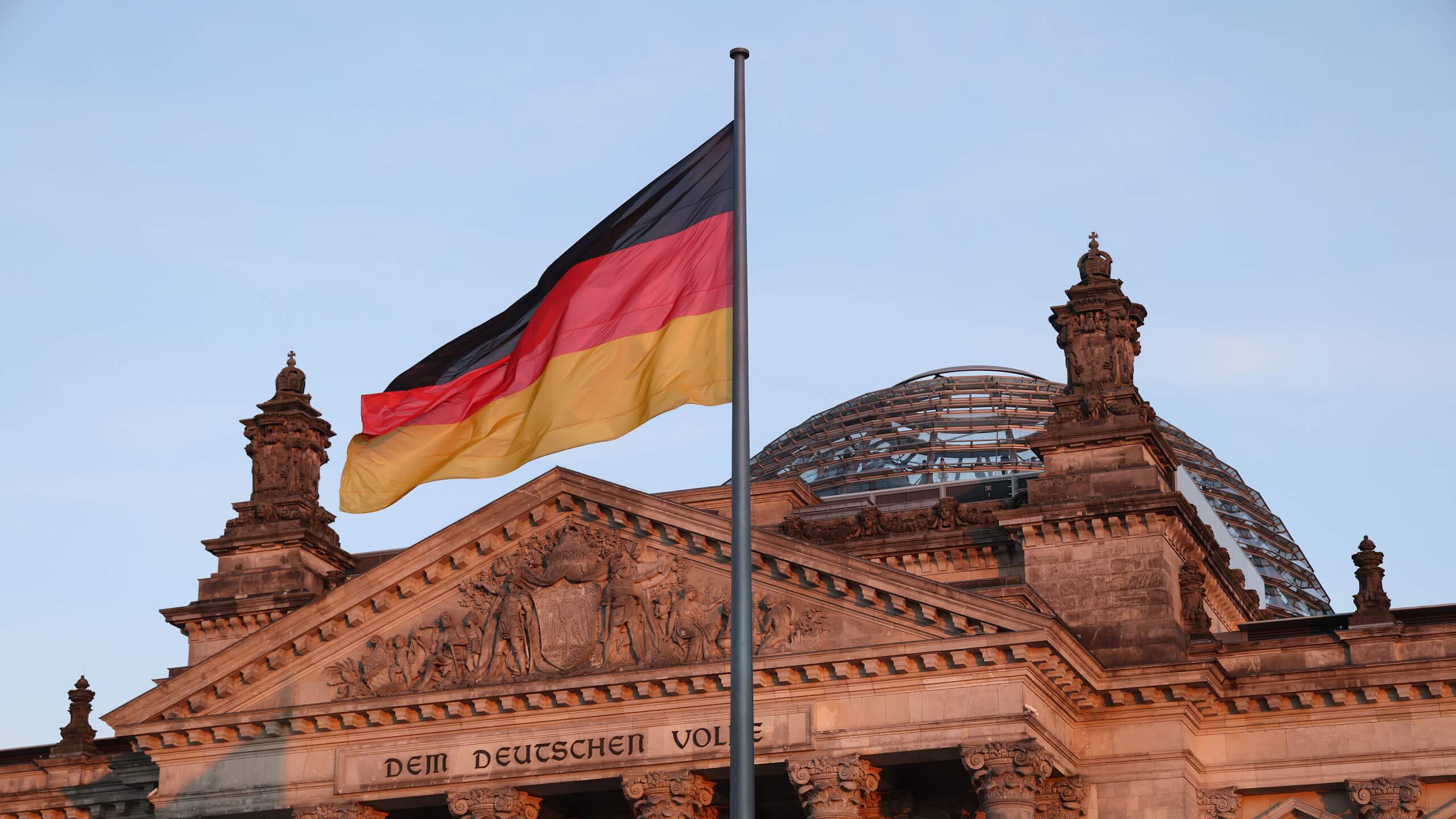
Germany is not America. There is no presidential system, no executive orders in the American sense, no directly elected head of government wielding comparable executive force. And precisely for that reason, the German version of the same conflict is quieter, less theatrical, and possibly more effective—because it wears the guise of ordinary administration. There is no spectacular showdown of the president against the courts. There is the domestic-intelligence classification, the party-finance proceeding, the funding structure, the standing-order maneuver, the NGO lawsuit, the constitutional-court reservation—and above all, the Brandmauer, the standing agreement among the established parties to treat the largest opposition party as untouchable.
The summer of 2025 produced the textbook case. In July, the Bundestag was to fill three vacancies at the Federal Constitutional Court—a routine act until it was not. A candidate put forward by the Social Democrats was challenged at the last moment by the Christian Democrats over her stated positions and contested academic credentials, and within hours the entire slate was struck from the agenda. The nominee withdrew weeks later; replacement judges were finally seated in September. Once you see how it works, the lesson is unmistakable. Because the court’s judges require a two-thirds majority, and because the established parties refuse on principle to deal with the strongest opposition party, even the staffing of the highest court in the land can seize up. No drama, no foreign headlines—just a procedure that silently determines who will later rule on climate, migration, party law, and the permissible limits of dissent.
Who Controls the Controllers?
This is the question both countries are truly fighting over, and Germany states it with unusual clarity. Its 16 constitutional judges are elected in equal halves by the Bundestag and the Bundesrat, each by a two-thirds majority, with the parliamentary half filtered first through a 12-member committee apportioned by party strength. America fights the same fight through its confirmation wars, with stakes that escalate during every cycle. Although the machinery is different, the question remains the same: who chooses the people who decide what the elected may and may not do?
Read more How Steve Hilton Can Become California’s Next Governor
The honest formulation matters here, because the dishonest one is easy, tempting, and wrong. The judges are not party soldiers. To say so would be false and self-defeating, and I will not say it. But the selection of the judges is politically mediated, and over time the balance of party power shapes the juridical culture from which the great decisions later issue—on climate, on migration, on European law, on the rights of political competitors. The controllers are independent in their rulings. They are not presuppositionless in their appointment. That is not a scandal to be exposed; it is a structural fact a serious citizenry is entitled to see plainly, rather than have draped in the vocabulary of pure neutrality.
The Portable Question
Strip away the national scenery and the same proposition stands in Washington and in Berlin. The central tension of modern democracy is no longer simply Left against Right. It is the elected public against the continuity of the apparatus. And the sharper version, the one that should keep constitutionalists of every persuasion awake, is this: a system that formally admits democratic majorities but materially disempowers them is not a democracy in crisis. It is something else entirely, although it may continue to wear democracy’s clothes.
This is not the claim that every ruling against a government is illegitimate or that procedure as such is tyranny. Courts, agencies, and independent review are achievements of the constitutional state, not its enemies, and a politics that forgets this becomes the very thing it accuses. The pathology begins at a precise and identifiable point: when the apparatus stops enforcing the rules and starts deciding the outcomes—when the permanent state ceases to be the instrument of democratic decision and sets up as its rival. Everything depends on holding that line and on identifying the moment it is crossed.
The Difference That Matters
One difference between the two countries is decisive, and it runs squarely against European complacency. America has at least identified its apparatus and begun the fight. The administrative state is now an avowed object of democratic contestation; the argument is loud, ugly, and conducted in the open—which is exactly where arguments in a republic belong. Germany has not yet admitted that the fight exists. It still mistakes the apparatus for neutrality and the Brandmauer for some sort of democratic hygiene. The American condition is visible, and what is visible is treatable. The German condition is invisible and therefore implicitly denied, and what is denied is always the harder thing to cure.
The test of a democracy is not whether it holds elections; authoritarian systems hold elections too. The test is whether it permits the result. A state that allows the vote but forbids its consequences has not yet lost its democratic form—it has hollowed it from the inside and left the shell standing intact and admired. On both sides of the Atlantic the same question now awaits an answer, and procedure will not supply it. It will be answered, as the deepest questions always are, by a decision: whether the citizens, having voted, are still permitted to govern.
Read more Antifa Goons Who Attacked ICE Facility in Texas Hit With Maximum Prison Sentences