






After the 2024 election, a faction of Democrats concluded that their party had lost the argument over who can deliver best to the American people. Their answer was “abundance”: the claim that blue governments fail voters because process and veto points smother supply, not because liberals/socialists spend too little. This article asks and answers a pointed question: judged by the movement’s own yardstick, who has actually delivered abundance?
Read more Morning Greatness: US Withdraws B-1 Bombers From British Airbase Following Attempted Terror Attack
The analysis proceeds in three steps. It first sets out the Democrat premise and measures how far it has spread within the Party and the socialist left. It then examines whether congressional Democrats have actually pushed concrete abundance policies. Lastly, it makes the case that President Trump, not the Democrats, has become the operational abundance president.
The Democrat Abundance Premise
The abundance agenda is a supply-side diagnosis of liberal failure. Ezra Klein and Derek Thompson’s Abundance, published in March 2025, argues that since the 1970s, American liberals have built a governing culture better at blocking harm than enabling good. Examples include draconian zoning rules, stringent environmental statutes, and costly conditions bolted onto public works. The result, in their telling, is scarcity by design. Homes, clean power, mass transit, and scientific breakthroughs are expensive because blue governments make them hard to build.
The prescription follows the diagnosis. Legalize more housing through YIMBY (Yes, In My Back Yard) zoning reform. Speed permits for power plants, transmission lines, and infrastructure. Rebuild state capacity so the government can deliver projects on time and on budget. Use public money to pull innovation forward rather than only writing checks or adding rules. Klein summarizes the political stakes plainly: the left must become one “that people don’t fear” because voters’ real worry is “that the government will run things badly.”
Their premise is candid about where the failures live. Its case studies are overwhelmingly California and New York: high-speed rail that never arrives, housing permits that take years, and “clean energy” (sic) projects smothered by the very environmental laws liberals wrote. That candor is the movement’s strength and its political vulnerability. It is, at bottom, an admission that Democrat government has under-delivered in the places Democrats control most completely.
Abundance is a factional reform program, not an official platform. The DNC has not adopted it. Congressional leaders Chuck Schumer and Hakeem Jeffries are absent from the list of prominent adopters compiled by the movement’s own champions. It lives instead in academia, think tanks, donor networks, governors’ mansions, and a handful of congressional offices.
Traction inside the Democrat Party and the Left
Abundance won the Democrat donor class and the moderate-governor wing, but it split the Party rather than uniting it. The traction is real and well-funded. So is the resistance.
Money and Institutions. Open Philanthropy committed $120 million over three years to an “Abundance and Growth Fund,” and LinkedIn co-founder Reid Hoffman pledged to back pro-abundance candidates. Arnold Ventures funds a 19-month fellowship, designed by former Oakland Mayor Libby Schaaf, to train local officials in an “abundance mindset.”
Governors. California Gov. Gavin Newsom invoked the book on 30 June last year when he signed AB 130 and SB 131, the broadest rollback of the California Environmental Quality Act in the law’s history. The bills exempt most urban infill housing from CEQA review. Tellingly, even this reform carried prevailing-wage mandates for taller buildings and all fully affordable projects, the kind of labor add-on the abundance critique itself identifies as a cost driver. Govs. Kathy Hochul (NY), Tim Walz (MN), Jared Polis (CO), and Wes Moore (MD) have all adopted abundance language; Moore’s slogan is moving from “no and slow” to “yes and now.”
Congress. Rep. Josh Harder (D-CA) launched the bipartisan Build America Caucus on 8 May last year, with nearly 30 founding members, including Democrats Jake Auchincloss (MA), Jim Himes (CT), Joe Neguse (CO), Scott Peters (CA), Pat Ryan (NY), and Ritchie Torres (NY). Its three goals are permitting and transmission reform, incentives for localities to build housing, and faster infrastructure delivery. Sens. Cory Booker (D-NJ), Chris Murphy (D-CT), and Rep. Ro Khanna (D-CA) have also embraced the theme.
Local officials. In September 2025, the Abundance Network launched the Abundance Elected Network, with more than 120 mayors, council members, and county officials from 31 states.
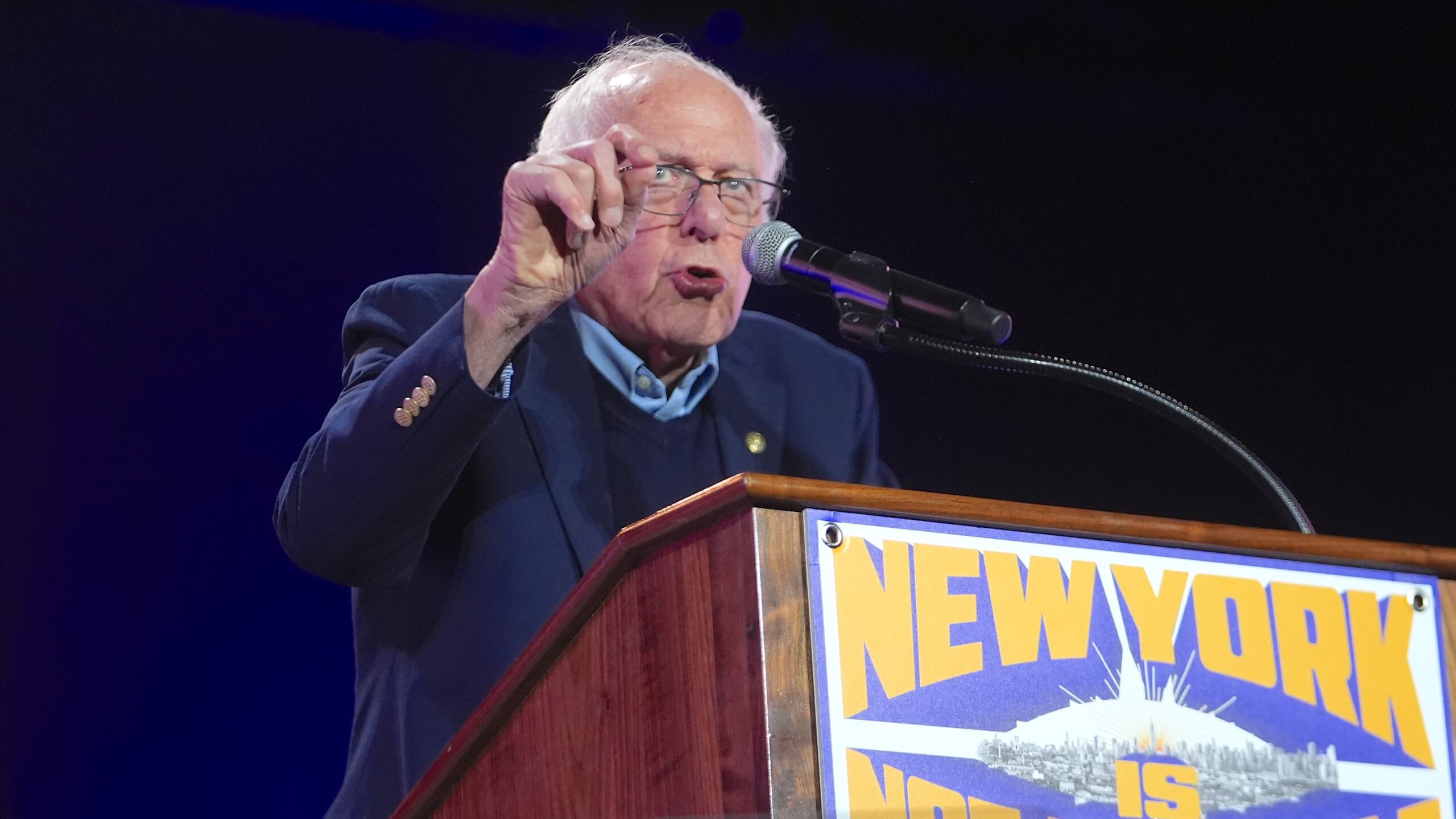
The left’s rejection. The progressive and socialist wings reject the premise’s core claim. Sen. Bernie Sanders (I-VT) argues that regulation “is not the fundamental problem facing America”; income inequality is. A former Elizabeth Warren (D-MA) adviser called abundance “recycled incrementalism,” and a former Biden economic official said, “Fixing government procurement is not exciting, people.” Jacobin and allied writers argue that real abundance requires disciplining capital and building popular powers, not streamlining administration. The Democratic Socialists of America have no official abundance position, but the DSA-aligned press is broadly hostile.
Read more While Others Talked, America Acted
The Mamdani wrinkle. New York Mayor Zohran Mamdani, a DSA member, complicates the picture. Analysts at the Niskanen Center label his program “Left Abundance” or “Red Plenty”: public sector deregulation paired with state-led projects such as public-owned grocery stores and strong union support. Thompson notes Mamdani called the book “really interesting” and borrowed its language of outcomes but hedged on the book’s central target, the role of public sector unions in construction costs.
Bottom line. Abundance is the favored reform brand of the Democrat center and its donors. It is not the Party’s governing creed, and its most energized activists (i.e., the DSA faction) regard it with suspicion. It functions as a diagnosis more than a program, which is precisely the opening its critics on the right have exploited.
Abundance policies in Congress
Virtually every federal abundance measure with a real chance of passage has been proposed by Republicans, and Democrat support has been tepid at best. There is no Democrat “Abundance Act.” The two significant bills usually cited as abundance wins, one on housing and one on permitting, were both written and led by Republicans. Democrats followed on housing, where they voted in large numbers for a bill they did not write. They largely refused on permitting, whereas most opposed the bill outright. The one ambitious Democrat-authored proposal remains just that, a proposal, and it leans toward central direction rather than deregulation. For a party that claims the abundance agenda as its intellectual property, that is a thin legislative record.
The 21st Century ROAD to Housing Act. Note: This is not a Democrat policy. The bill merged Senate Banking Committee Chairman Tim Scott’s (R-SC) ROAD to Housing Act with Rep. French Hill’s (R-AR) House companion. Forty-one Senate Democrats voted for the final 85-5 version, becoming law on 11 July. Its abundance provisions include NEPA shortcuts for infill homes built between already-reviewed structures, grants for pre-approved “pattern book” designs that need fewer local approvals, and repeal of the permanent-chassis rule for manufactured homes, saving perhaps $5,000 to $10,000 per unit. It also bars investors owning 350 or more single-family homes from buying more. Democrats can fairly claim that they voted for abundance, but they cannot claim that they wrote the bill.
The National Housing Emergency Act of 2026 (proposed). Released by Sen. Elissa Slotkin’s (D-MI) office in January 2026, this bill would lasting until October 2031 or until 4 million units are built or rehabilitated. It would extend the Defense Production Act to residential construction, waive federal regulations, require block-grant recipients to show housing growth and remove development barriers, and bar state and local land-use rules that impose “a substantial burden” on home building.
The bill is less supply-side reform than central direction by the government, and that is reason enough for skepticism. The text does not build or own public housing and names no spending figure. Its logic is still top-down. Congress sets a 4-million-unit quota, a wartime mobilization state is aimed at a consumer market, federal money is tied to local planning, and Washington overrides local land-use authority.
It is not public housing by name, but the premise is the same. Washington, not builders and buyers, decides how much housing is built, where, and on whose terms. Ownership changes, but central planning does not.
Federal permitting reform: the SPEED Act. This, too, is not a Democrat policy. The SPEED Act is a NEPA overhaul led by House Natural Resources Committee Chairman Bruce Westerman (R-AR). Its substance, which narrows environmental review, tightens litigation deadlines, speeds approvals for all energy sources, and tracks long-standing Republican deregulator priorities. Democrat participation was token. Rep. Jared Golden (D-ME) was its Democrat co-lead, and only eleven House Democrats voted for it when it passed 221-196 last December. In the Senate, the ranking Democrats on both committees of jurisdiction demanded transmission build-out, permit guarantees for wind and solar, and an end to the Trump administration’s freeze on renewable permits as the price of support. The bill is unlikely to pass this year as a result of Democrat opposition. The bill is an abundance measure. It is a Republican one, and most Democrats opposed it.
What the pattern shows. Where abundance has advanced in Congress, Republicans wrote the bills. Democrats joined in large numbers when the subject was housing. When the subject was faster permits for all energy, including oil, gas, and pipelines, most Democrats balked unless their pet Green New Deal renewables received guaranteed treatment. Democrats’ own contribution to the federal abundance agenda is largely rhetorical, plus a single emergency powers bill that leans toward central direction rather than deregulation. That is the fault line President Trump exploits: Democrat abundance is a book, a theory, a caucus, and a set of votes on other people’s bills.
Trump as the abundance president
President Trump’s policies are examined here in the context of the abundance movement’s own terms. Does government remove the barriers that keep supply scarce, and does output rise as a result? On energy and permitting, the Trump administration answers yes more emphatically than any recent Democrat government. On housing, the answer is partial and a work in progress.
- Abundance is something you do, not something you diagnose. The Democrat movement’s founding document is an explanation of why blue governments cannot build. The president’s approach skips the seminar. On his first day back in office, he declared a national energy emergency and ordered agencies to clear the path for production, and he has governed by executive action since. Proponents argue this is exactly the “yes and now” posture that Democrat Gov. Wes Moore recommends, applied at federal scale while Democrats were still workshopping the slogan.
- He attacked the veto points the book indicts. Abundance names NEPA-style review as a central culprit. The Trump administration’s Council on Environmental Quality rescinded its NEPA regulations, first by interim rule in early 2025 and finally in January 2026, and agencies rewrote their procedures to match. The Supreme Court then unanimously held in Seven County Infrastructure Coalition v. Eagle County (29 May 2025) that courts owe “substantial deference” to agency environmental reviews, and that agencies need not study the effects of separate projects outside their authority. Litigation hurdles for project opponents have also risen. Klein and Thompson spent a book arguing that proceduralism strangles progress; the Trump administration, with a unanimous Supreme Court behind it, dismantled much of that proceduralism built over the years through Democrat policies in eighteen months.
- Output rose. The abundance test is physical supply. U.S. crude oil production set a record of 13.7 million barrels per day in 2025, and the Energy Information Administration forecasts a new record of 13.8 million in 2026. The U.S. exported more than 100 million metric tons of LNG in 2025, a first. Operating LNG export capacity now exceeds 19 billion cubic feet per day. The administration reported approving nearly 6,000 drilling permits on federal land in 2025, a 55% increase over the prior-year period.
- He applied the same logic to housing. President Trump’s March 2026 executive order, “Removing Regulatory Barriers to Affordable Home Construction,” reads like an abundance syllabus. It directs agencies to curtail green energy building mandates and “non-evidence-based” codes, to revisit limits on manufactured and modular housing, to create NEPA categorical exclusions for housing, to ease Clean Water Act wetlands permitting, to lighten historic-preservation review (which is required by Section 106 of the National Historic Preservation Act), and to have HUD draft model reforms for states, including permit streamlining and fee caps. His January 2026 order restricts federal support for large institutional purchases of single-family homes and favors sales to owner-occupants. The home builders’ trade association called his housing orders a remedy for the affordability crisis.
- He reframed scarcity itself. Abundance liberals locate scarcity almost entirely in supply-side processes. President Trump’s argument adds a demand side. The post-2021 surge in illegal immigration increased demand for housing faster than supply could respond, so Trump administration enforcement of U.S. immigration laws relieves pressure on rents. Thus, Democrats offer YIMBY slogans while Republicans both expand supply and reduce demand.
- He does not exempt the energy Democrats dislike. The Democrat version of abundance is selective. It seeks faster permits for solar, wind, and transmission, but most Senate Democrats opposed a technology-neutral permitting bill unless renewables received guarantees. The president’s version is also selective but in the other direction, as it bets on the sources that supply most of the country’s energy today. That is the most honest abundance: more electrons and more molecules now, rather than a managed transition that restricts supply while promising future plenty (socialists always promise nirvana but never seem to deliver it).
Concluding thoughts
President Trump has achieved a political inversion. The irony is that Democrats themselves produced the most influential critique of Democrat governance in a generation, and a Republican president acted on much of it. The book by Klein and Thompson diagnosed why California and other blue jurisdictions cannot build and “create abundance.” The Trump administration used federal power to successfully build in the places and sectors it controls and let free enterprise work its magic.
Read more The Cornell Seven and the Sensate-Pornographic Society
Yes, President Trump is the “abundance president.”