







Health and Human Services (HHS) Secretary Robert F. Kennedy Jr. on Monday announced major developments in the Trump administration’s efforts to reduce cruel and unnecessary animal testing and accelerate a transition to human-based scientific research.
Read more Brooke Rollins: USDA Has Removed Nearly 6 Million People From SNAP Due to Fraud, Work Requirements
“We are moving HHS toward a new era of biomedical research that puts human biology at the center of science,” said Kennedy. “We are modernizing outdated regulations, investing in human-based technologies, and breaking down barriers that have kept researchers dependent on animal models when better tools are available. Under President Trump, we will use the best science to protect patients, accelerate medical breakthroughs, and end unnecessary animal testing.”
Kennedy has led a coordinated federal shift to phase out animal testing, driven by a new Food and Drug Administration (FDA) guidance and National Institutes of Health (NIH) initiatives.
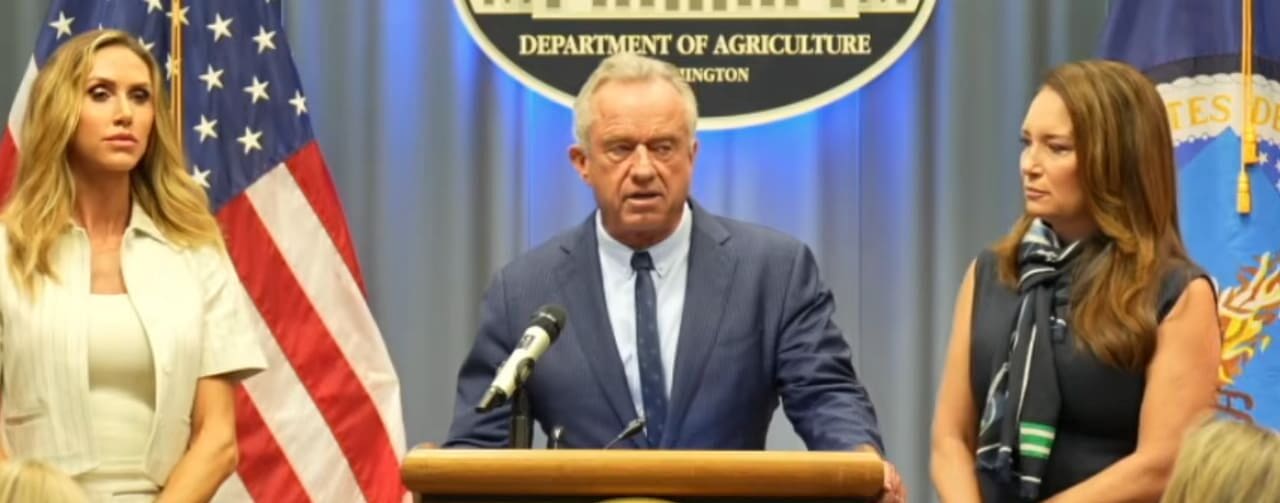
The HHS secretary joined United States Department of Agriculture (USDA) Secretary Brooke Rollins; US Attorney for the District of Columbia Jeanine Pirro; President Trump’s daughter-in-law, Lara Trump; and other Trump officials at a press conference Monday, touting the accomplishments of the administration’s ambitious Animal Welfare Strike Force (AWSF).
Since February, the Animal Welfare Strike Force (AWSF) has taken nearly 30 actions to improve enforcement against chronic and severe animal welfare violators, including abusive breeders and those involved in dog fighting rings, Rollins said.
The multi-agency initiative was formally launched on February 18, involving the USDA, HHS, the Department of Justice (DOJ), and the Department of Homeland Security (DHS).
Kennedy announced that the FDA issued a direct, final rule on Monday, updating its regulations to remove references to animal testing and implement the FDA Modernization Act.
While the guidance stop short of outright banning animal testing, it aims to make animal studies the exception rather than the norm within three to five years.
“The rule does not ban animal studies or change the FDA’s evidentiary standards,” Kennedy esplained, going on to list a series of “investments and initiatives” being made to build the infrastructure needed to develop human-based research.
Those investments, he said, include “more than $88 million in funding for biomedical infrastructure projects nationwide; a new challenge offering more than $7 million in awards to demonstrate how quantum-enabled approaches can improve detection and measurement in lab-based New Approach Methodologies (NAMs); a state-of-the-art laboratory at the NIH Clinical Center that will integrate standardized human organoid models, robotics, artificial intelligence, and advanced data capabilities to enable experiments on reproducible human biological systems, an initiative to recruit grant reviewers with expertise in human-based science; and a new request for information from the scientific community to assess the feasibility of an annual public report tracking the number of vertebrate animals used in NIH-funded research.”
The FDA has issued multiple guidances designed to reduce animal studies in drug development, including changes expected to spare hundreds of non-human primates and more than one million horseshoe crabs annually.
“FDA is modernizing its regulatory framework so developers can use the best science available to demonstrate that medical products are safe and effective,” said Acting FDA Commissioner Kyle Diamantas, J.D. “By removing outdated barriers to new approach methodologies, we can reduce unnecessary animal testing while making product development more predictive and efficient.”
Read more DHS Top Attorney: Immigration Attorneys Filing False Asylum Claims Face Crackdown
Kennedy called for the end of non-human primate imports and the conversion of the seven National Primate Research Centers into sanctuaries, a move supported by the CDC’s decision to shut down its in-house primate program.
Meanwhile, the Centers for Disease Control and Prevention (CDC) has been working to reduce its laboratory animal colony and establish additional hurdles to ensure any proposed animal research aligns with public health needs.
“CDC is reducing animal use while ensuring that our scientists have the tools they need to protect Americans from health threats,” said CDC Director Erica Schwartz. “We are applying greater scrutiny to animal research and focusing our resources on science that directly advances our public health mission.”
The Advanced Research Projects Agency for Health (ARPA-H) has invested in artificial intelligence and computational modeling to better predict drug safety, optimize dosing, and reduce preclinical animal testing.
“Artificial intelligence and advanced computational modeling can fundamentally change how we predict whether medicines will be safe for people,” said ARPA-H Director Alicia Jackson, Ph.D. “We are developing tools that can provide better information earlier and help move promising treatments to patients more efficiently.”
NIH recently closed its last intramural beagle laboratory—Ridglan Farms in Blue Mounds, Wisconsin—and is allowing grant funding to be used to retire or rehome the dogs.
“NIH is building the scientific infrastructure needed to develop, validate, and scale technologies that better reflect human biology,” said NIH Director Jay Bhattacharya, M.D., Ph.D. “Our goal is to give researchers better tools to understand human disease and translate discoveries into treatments that improve patients’ lives.”
According to Lauree Simmons of Big Dog Ranch Rescue, 2,115 beagles were taken from Ridglan Farms and rehomed.
Two of those beagles were adopted by US Attorney Jeanine Pirro, Lara Trump noted.
“I have six rescues so there’s definitely something wrong with me,” said Pirro.
Kennedy’s push to end animal testing in medical research, part of the Make America Healthy Again initiative, has garnered rare bipartisan support in Congress, with lawmakers introducing bills to prohibit funding for painful animal experiments when alternatives exist.
Read more FBI Director Kash Patel Says AI Is Helping Stop School Shooting Plots